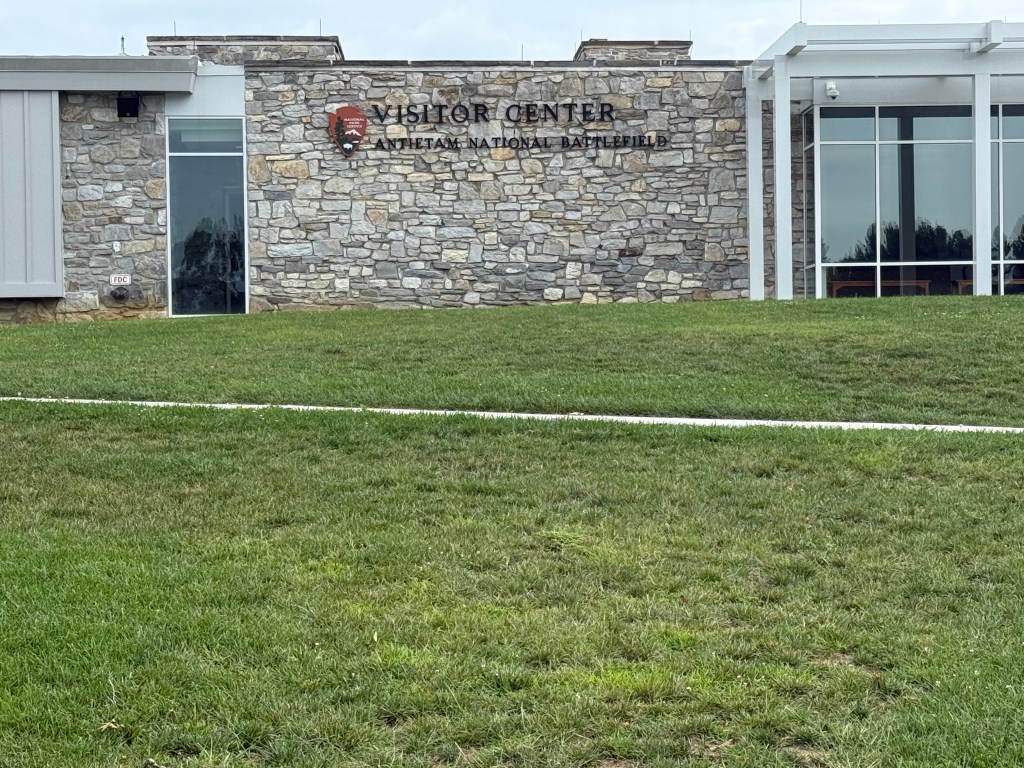
The other day, Mrs Bear and I were driving home to Central Pennsylvania from Washington, D.C. after a visit with our elder cub. The drive takes us through Maryland’s western panhandle before taking the Interstate north to State College. And every time we drive this route, I notice the sign for Antietam Creek. And almost every time I drive by, I say to myself that we should tour the battlefield.
Why is it that the attractions close to you are the last ones you visit ?? We drove a hundred miles out of our way to visit Shiloh …It took me 60 years to walk across the Golden Gate Bridge after growing up seven miles away … Mrs Bear had never been to the top of the Empire State Building or Ellis Island after growing up across the channel in New Jersey until I expressed interest.
But the other day, we were driving home with nothing else planned and I suggested we go to Antietam. Mrs Bear agreed and asked what the significance of Antietam was??
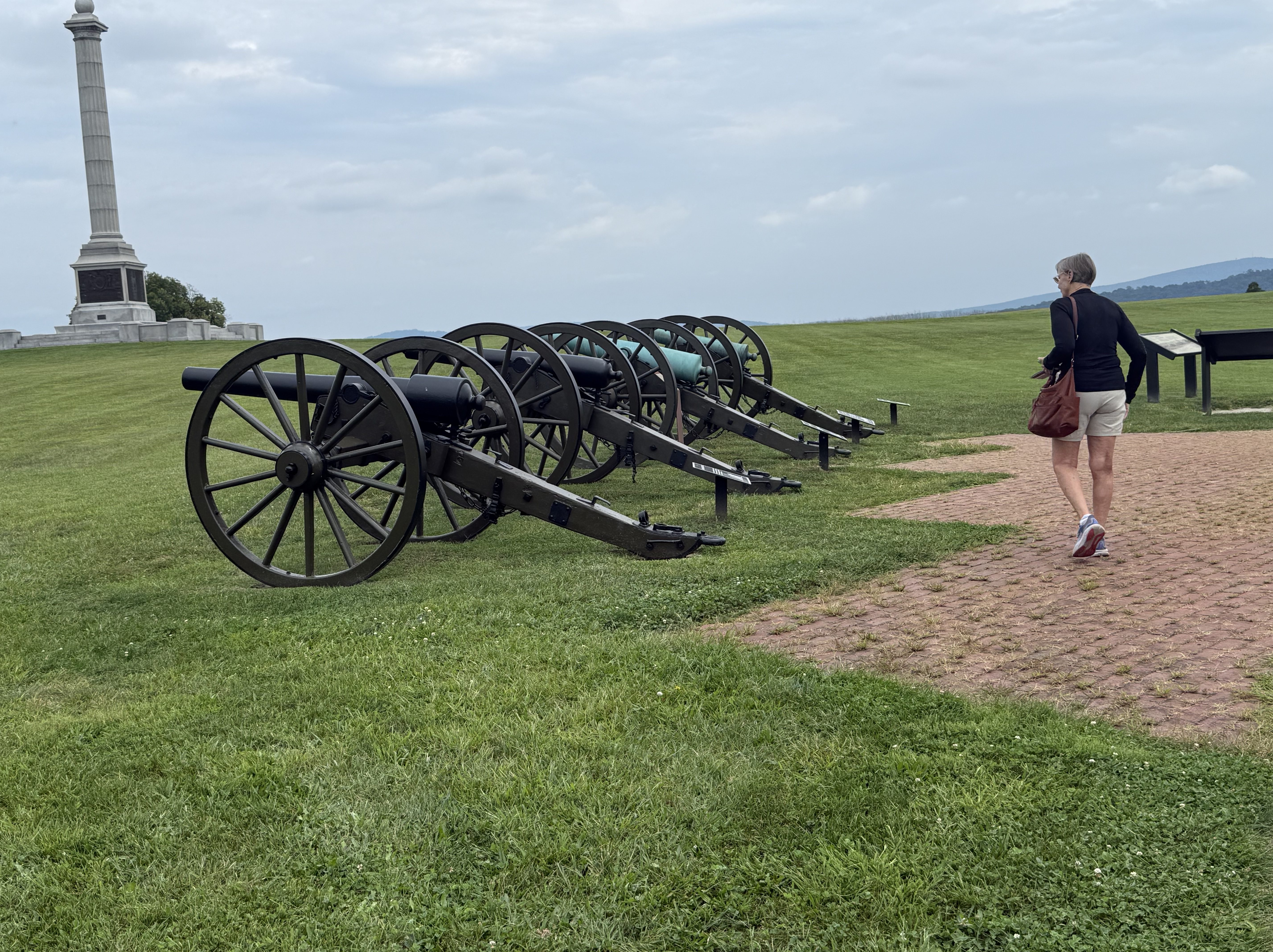
After winning a series of battles in Virginia, Robert E Lee turned his army of 60,000 troops north to invade the North. He hoped that a big victory on Northern soil would lead to an end of the war. A couple European countries were toying with the idea of recognizing the Confederacy as an independent country. The North countered Lee’s advance with their own army of roughly the same size. They met outside of Sharpsburg, Maryland on the surrounding farmland. The ensuing battle started early in the morning and went all day… and yielded the bloodiest single day in American History. At the end of the day, the armies lost about 25% of their soldiers to dead, wounded, and missing.
Most of the day consisted of various armies trying to dislodge their opponents from the field with inconsistent results.
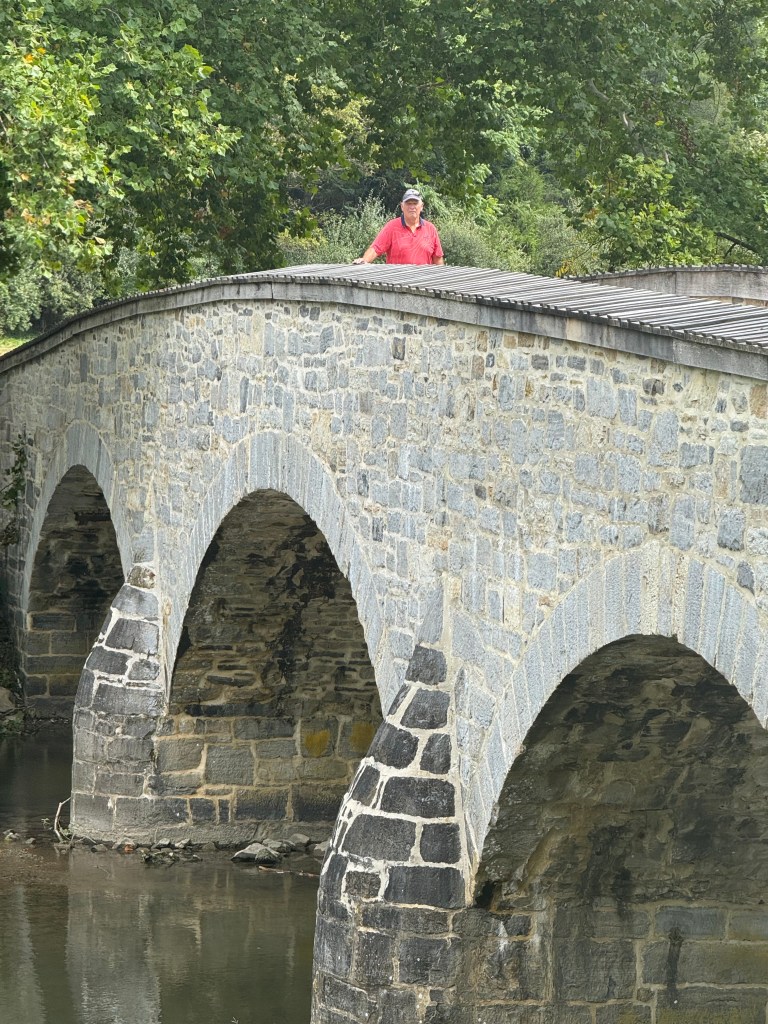
The most famous part of the battle was fought on the stone bridge pictured above. 500 Confederate sharpshooters held off wave after wave of Union soldiers for hours !!
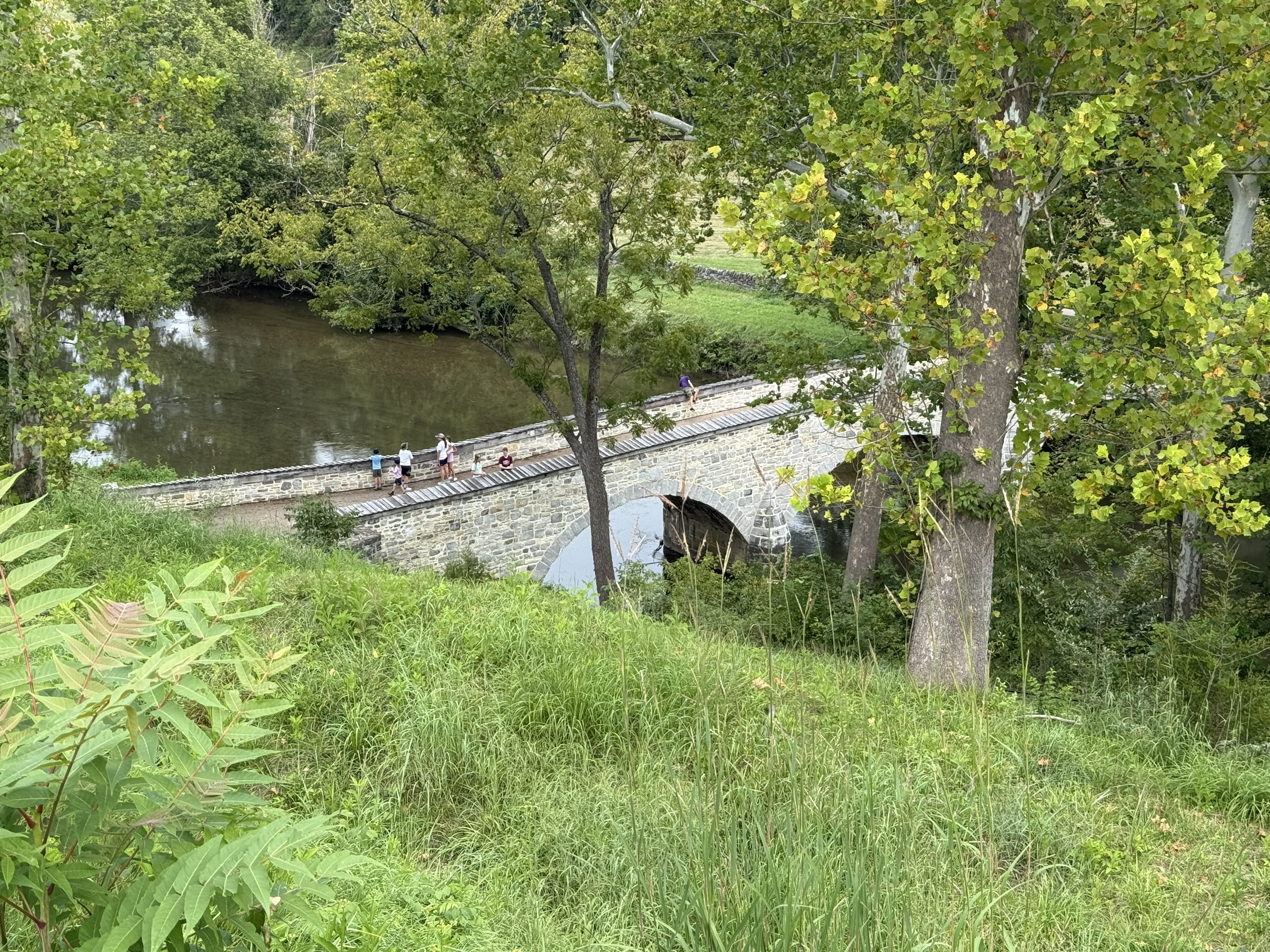
They were aided by two Confederate batteries on the heights above the bridge.
Fans of the TV series Hell On Wheels may remember a confrontation between Colleen Bohannon, the Confederate soldier who confronts an Army Captain in possession of a Rebel sword he reported acquiring at Antietam after a major victory at this bridge. Bohannon puts him in his place by telling him that he was at the bridge and took part in the death of over 500 Union soldiers before they ran out of ammunition and had to retreat.
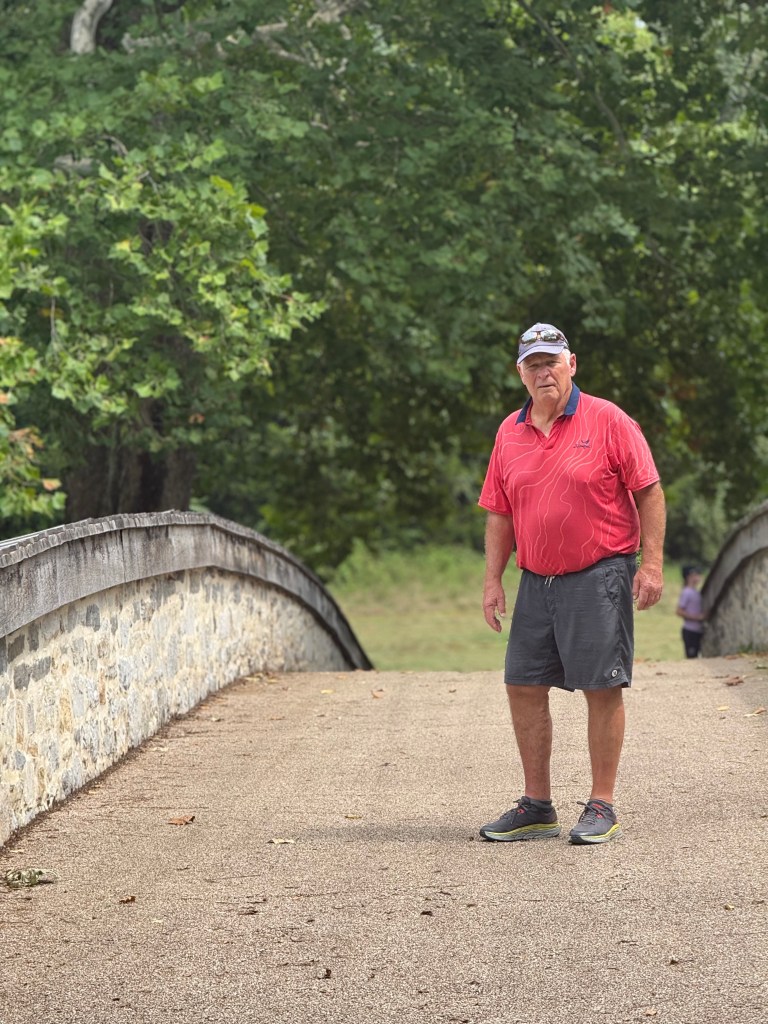
The Union troops did eventually take the Burnside Bridge and advanced up the opposing heights before being confronted and turned back by the last Confederate troops arriving at the battle. The battle ended with both sides sustains heavy casualties. The North dug in for the battle they thought would continue the next day. But Lee removed his army overnight and retreated back over the Potomac River to Virginia. His retreat allowed the North to declare Antietam a victory!!
Abraham Lincoln had mixed reactions to the outcome at Antietam. He was furious with his generals when they didn’t pursue Lee as he retreated. BUT he used the victory at Antietam to publish the Emancipation Proclamation which, on paper, liberated the slaves of the Confederacy… while this paper did not immediately change the fate of most slaves, it did have the impact of having European countries from backing off the possibility of supporting the Confederacy. AND it led to many Negroes volunteering to fight for the Union. By the end of the war, 25% of Union troops were Negroes.
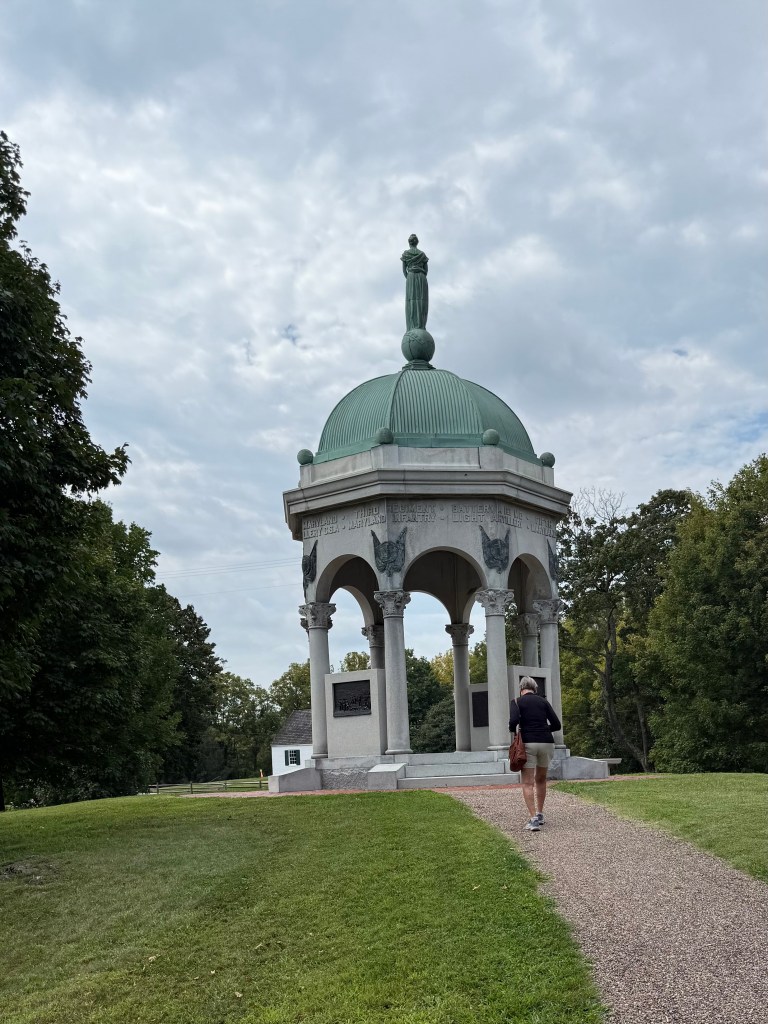
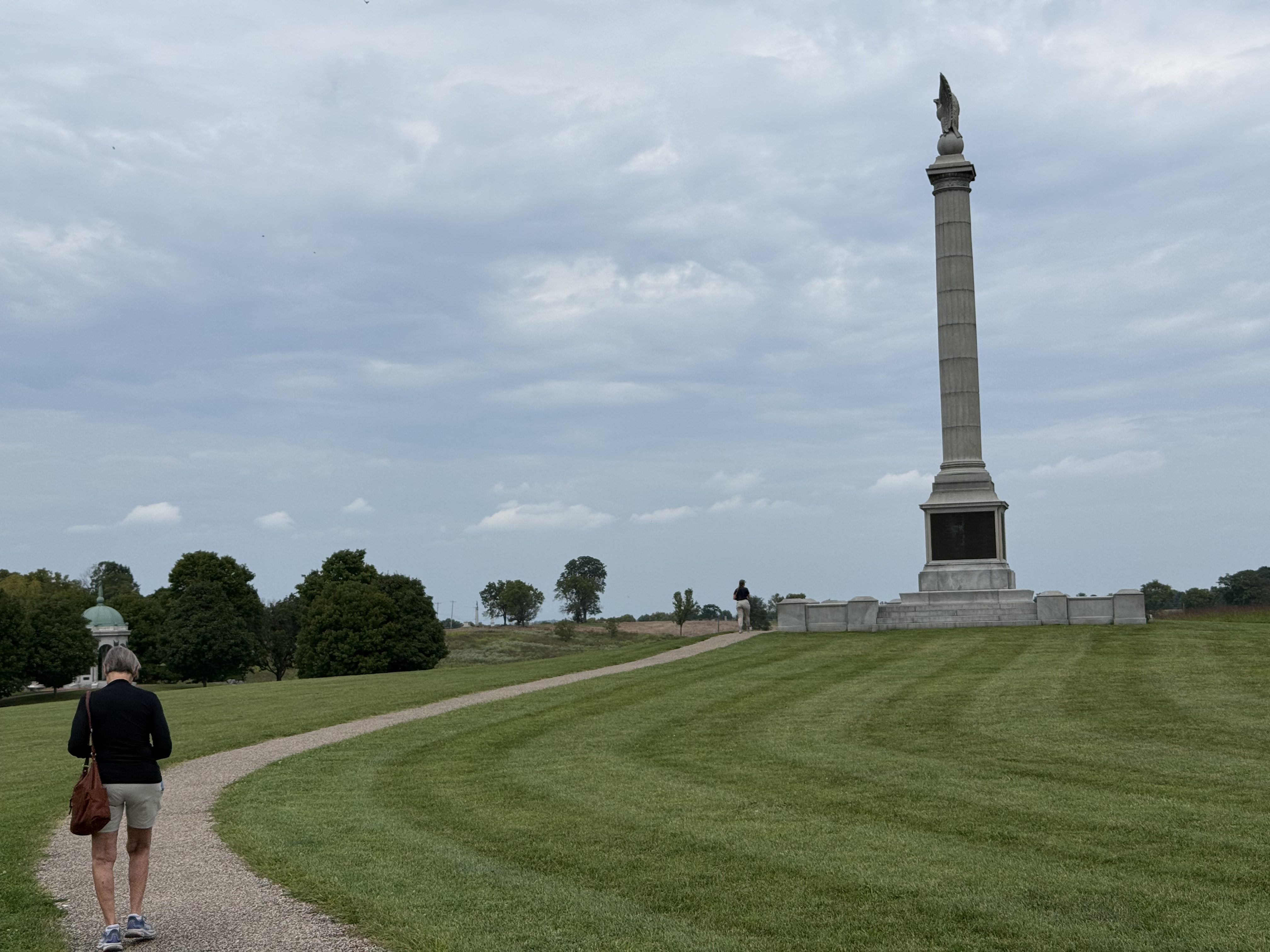
Mrs Bear and I were very impressed with the organization of the battle site. It had obviously been well researched with plaques everywhere commemorating the troop identifications regarding units and states, and the auto trail was well laid out and easy to follow.
Finally, Antietam was the first battle that was photographed extensively the day after the fighting ended. The pictures were published in various news outlets, which showed the American public the horrors of war in all its bloody reality !!
An important day in U.S. history that we finally took the time to experience !!


