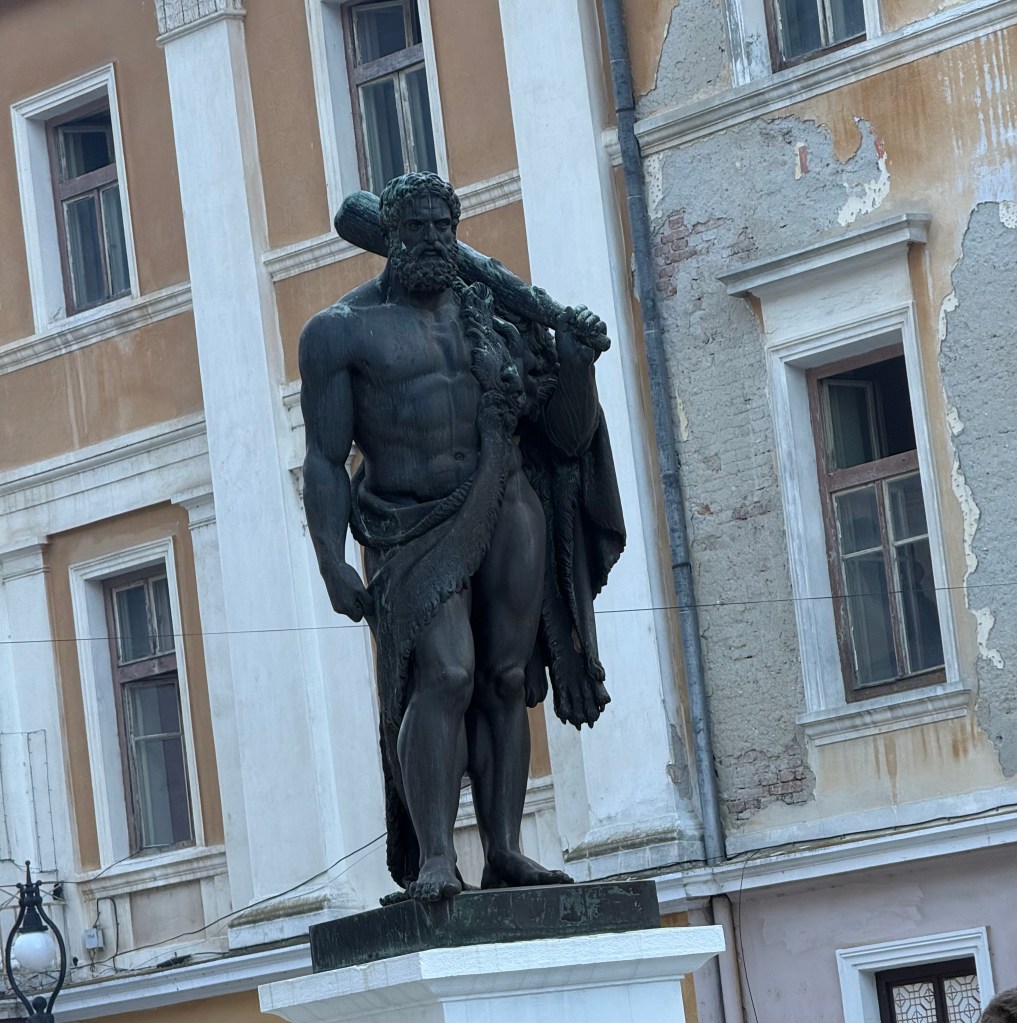
Due to our constant reshuffling of tour locations and selections, we spent two days visiting small Romanian towns with heavy Roman influences. The first was Hercules, named after the Roman deity.
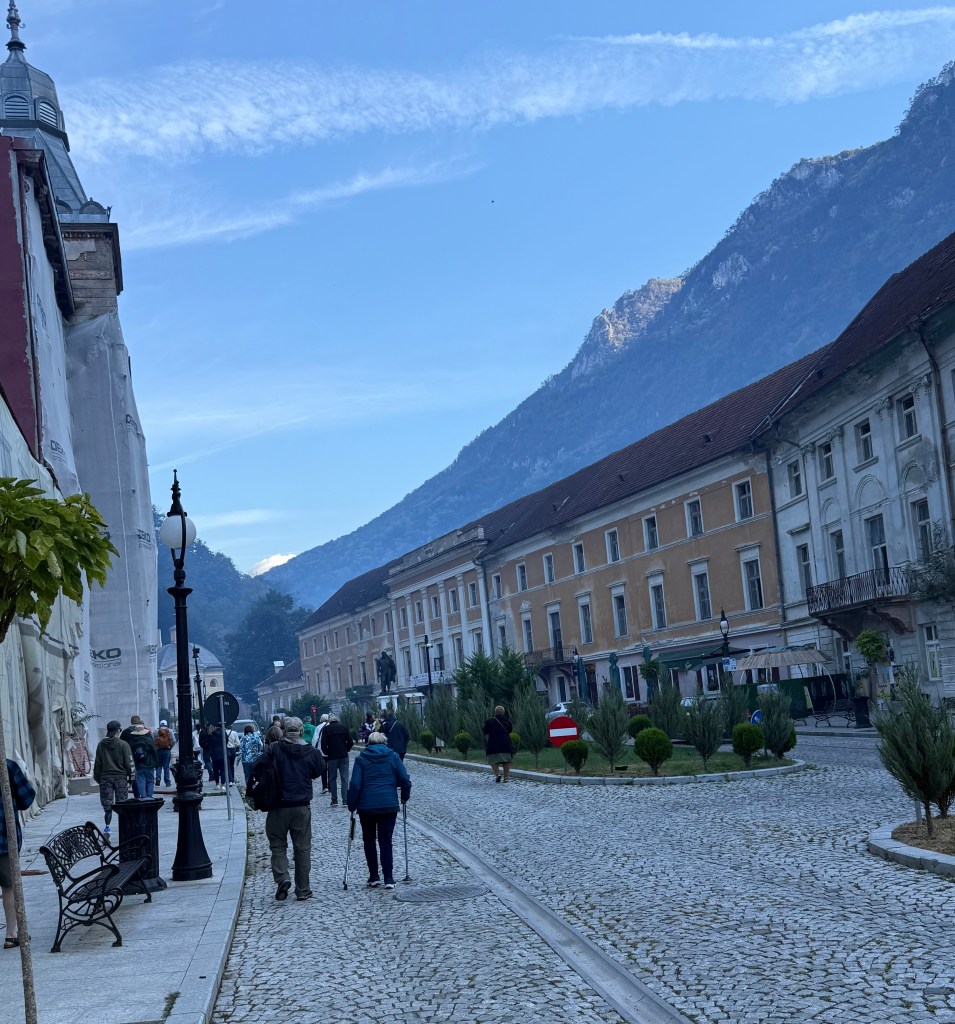
From the height of the bluffs behind the town you can see we were not far from the Locks. The name Romania comes from the term that meant “belonging to Rome.” And Hercules was most famous for the oldest Roman baths in the region.
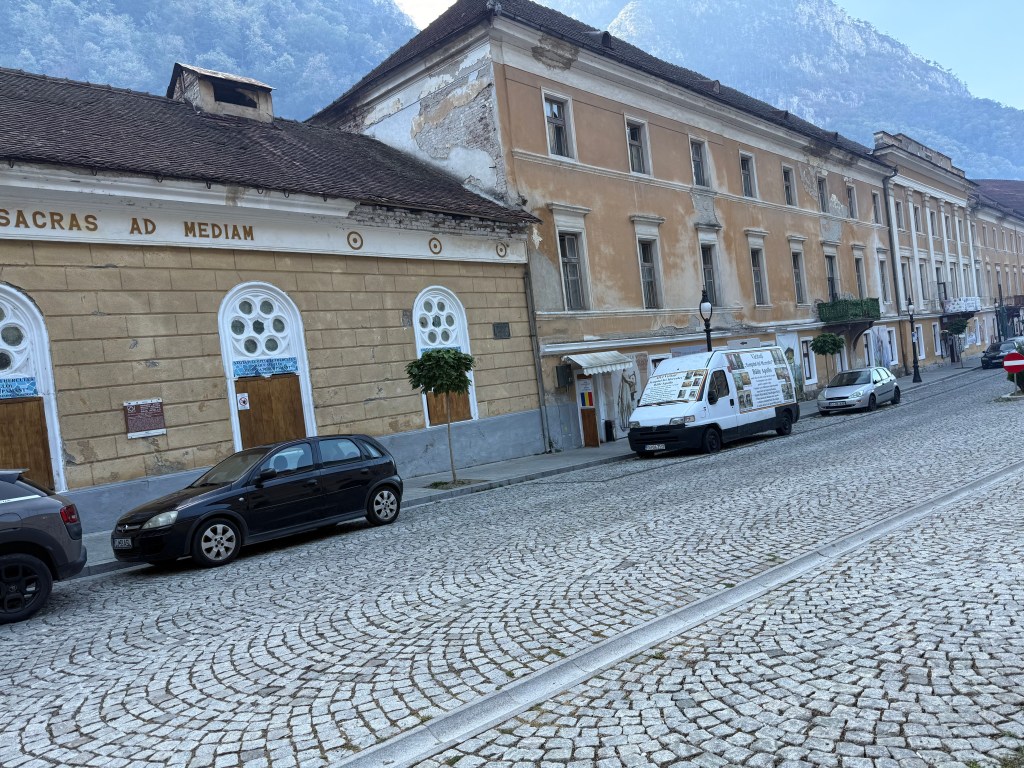
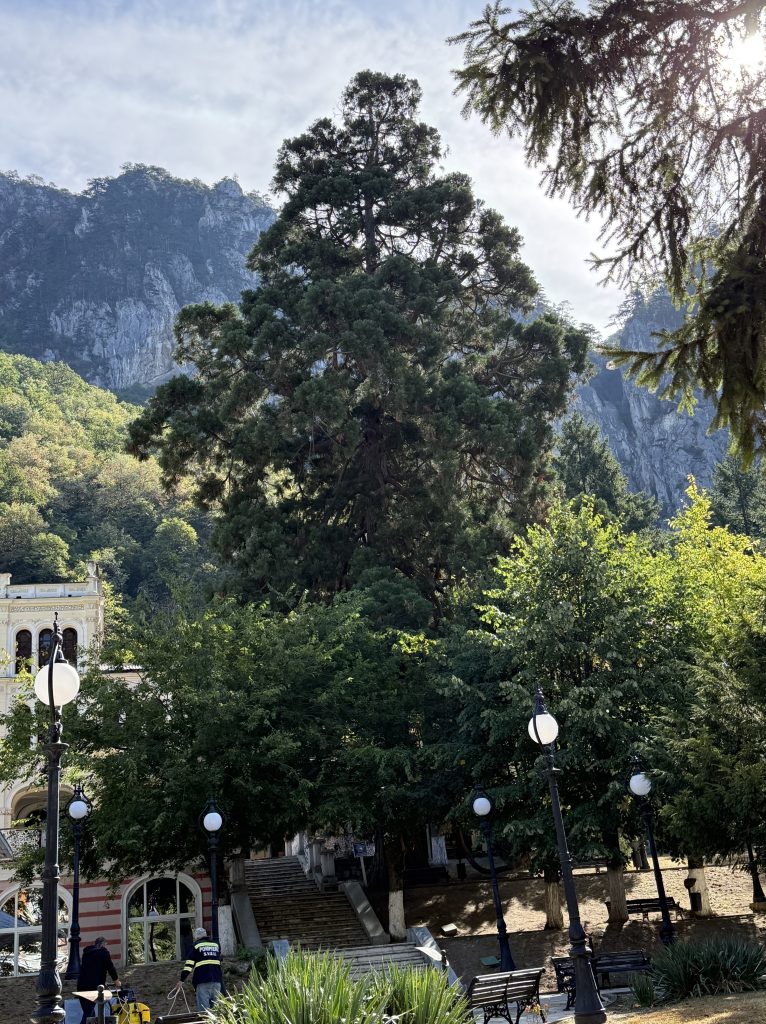
The town was in the process of renovating several older buildings. But I was the most impressed with the presence of a Sequoia redwood tree in the middle of town. The tree is 165 years old, and we were told there were initially two. And details of the demise of the second tree vary. Some say it was struck by lightning. Others say it fell during World War Two. Despite this, for a Northern Californian, it is always exciting to see these Giants in other parts of the world
The following day we visited a wider part of the Danube and docked at a really nice museum that illustrated Emperor Trajan crusades to capture what, in those days, was known as Dacia. Dacia was bounded on the south by the Danube and extended into what is known today as Transylvania. We usually think about Transylvania because of its references to Count Drac and his castle (more in the next blog entry.) Trajan made his first incursion into Dacia in 101 AD but turned back when their king ( the guy on the stone sculpture) agreed to pay taxes. But after reneging, Trajan came back four years later and built the bridge across the Danube that got him the plaque.
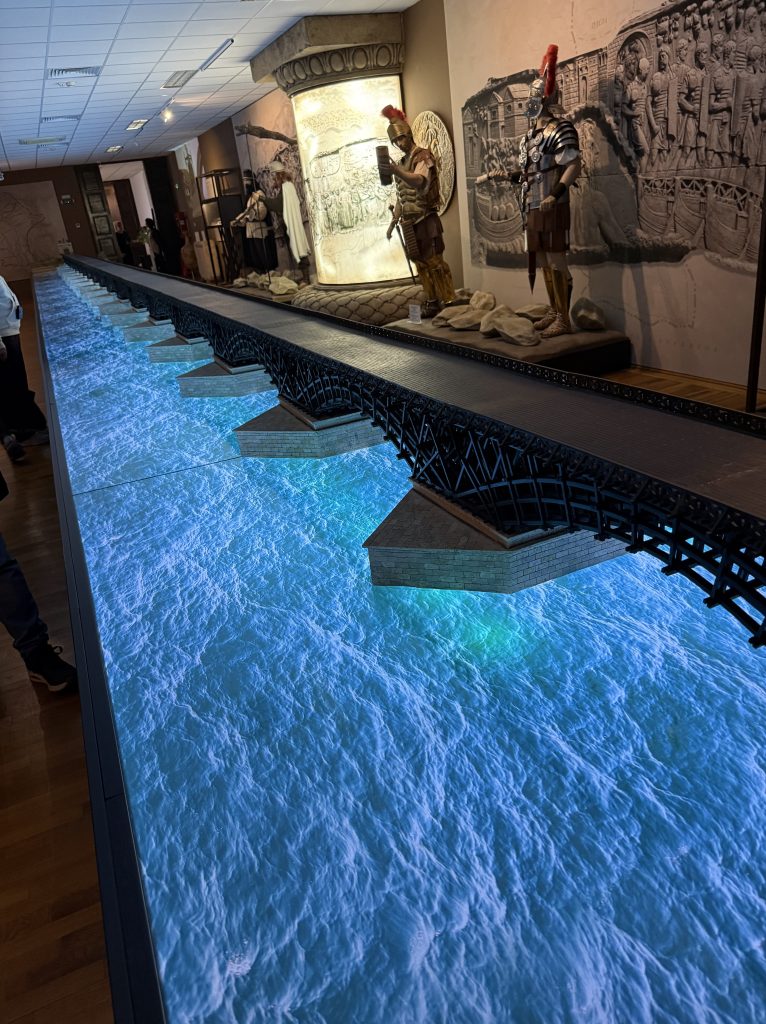
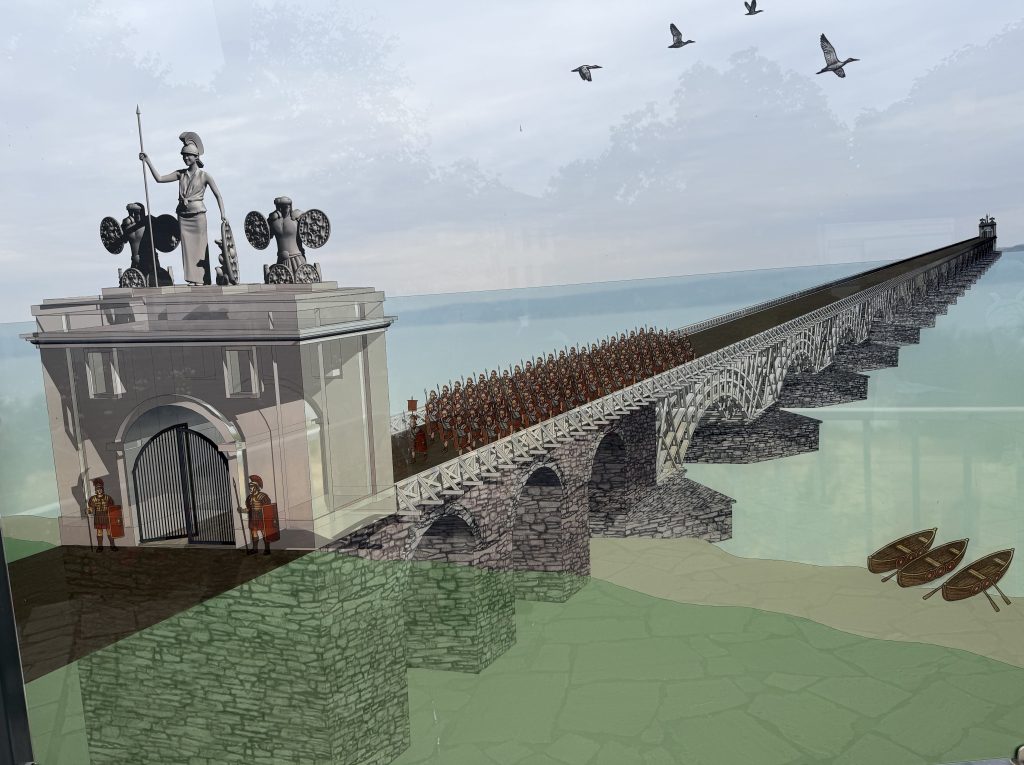
I don’t recall exactly how long the bridge was, but it was LONG for the second century. You can get a feel for the undertaking by the number of arches !! This feat of engineering is really what made the Romans the ROMANS !! I was reminded of the ramp at Masada and Caesar’s siege lines during his conquest of Gaul. The museum had a three minute animated video showing how they did it. The part that amazed me was their ability to build a tower that was then used to pick up heavy objects, transport them over the water, and lift them up into the air. We see these winches in every city on high rise construction today, but the Romans figured it out 2,000 years ago !!
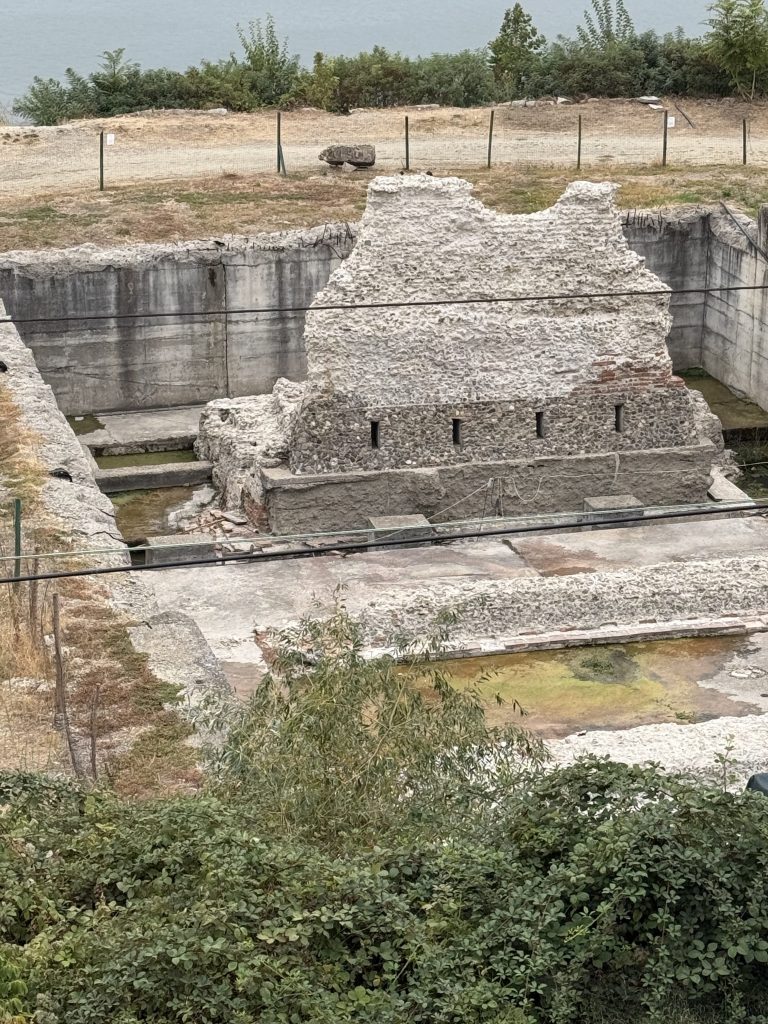
The picture above is the remains of one of the bases for the bridge. The foundations in the water are long gone. Hats off to Viking who improvised this outing for us when our original itinerary was impossible due to low water levels. But on our way out, we passed through a monster lock a few miles downstream.
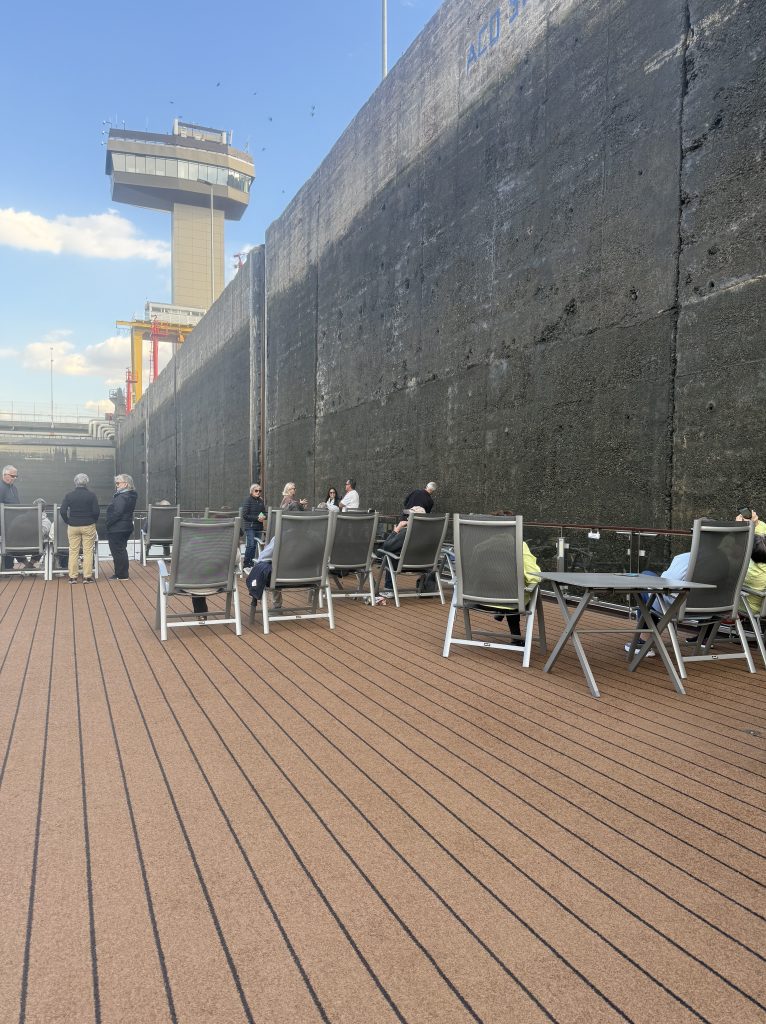
You can tell by the discoloration on the wall that we have dropped about 20 feet to go through the lock.
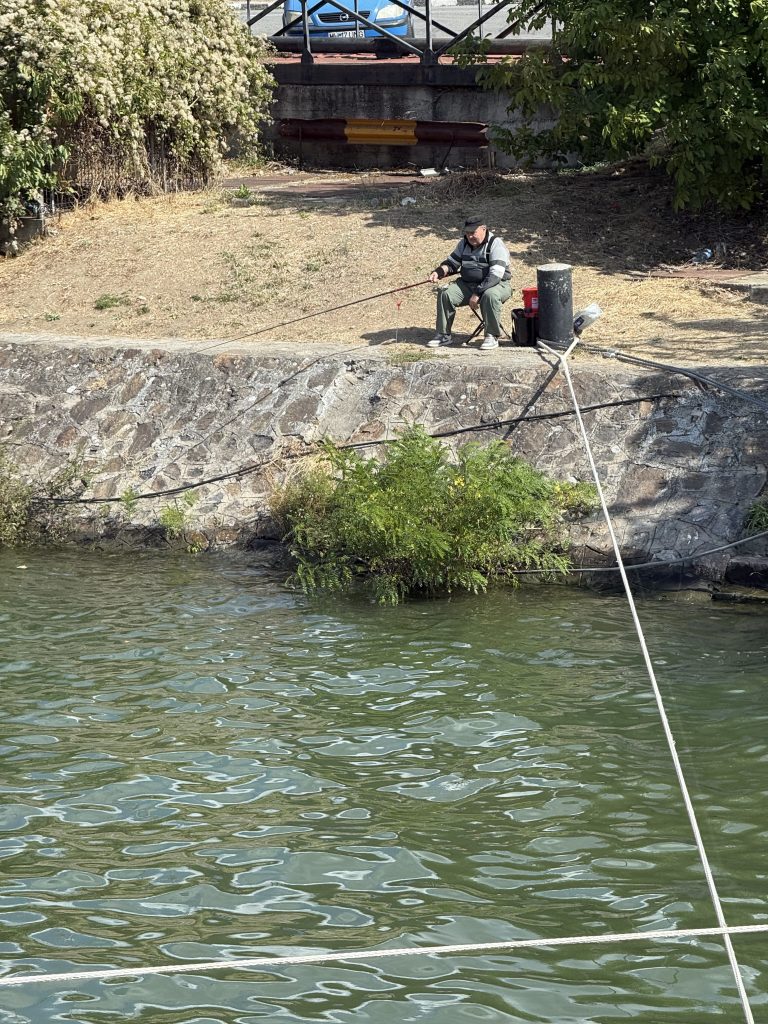
One more little tidbit. I noticed this local guy set up to fish from our ship. He spent a half hour setting up his pole that must have been 10 feet long. When he did start casting, he threw the line where you see in the picture … about 3 feet off shore. I watched for the better part of an hour and he had no bites. But like every good fisherman, he seemed to be having a good time.


