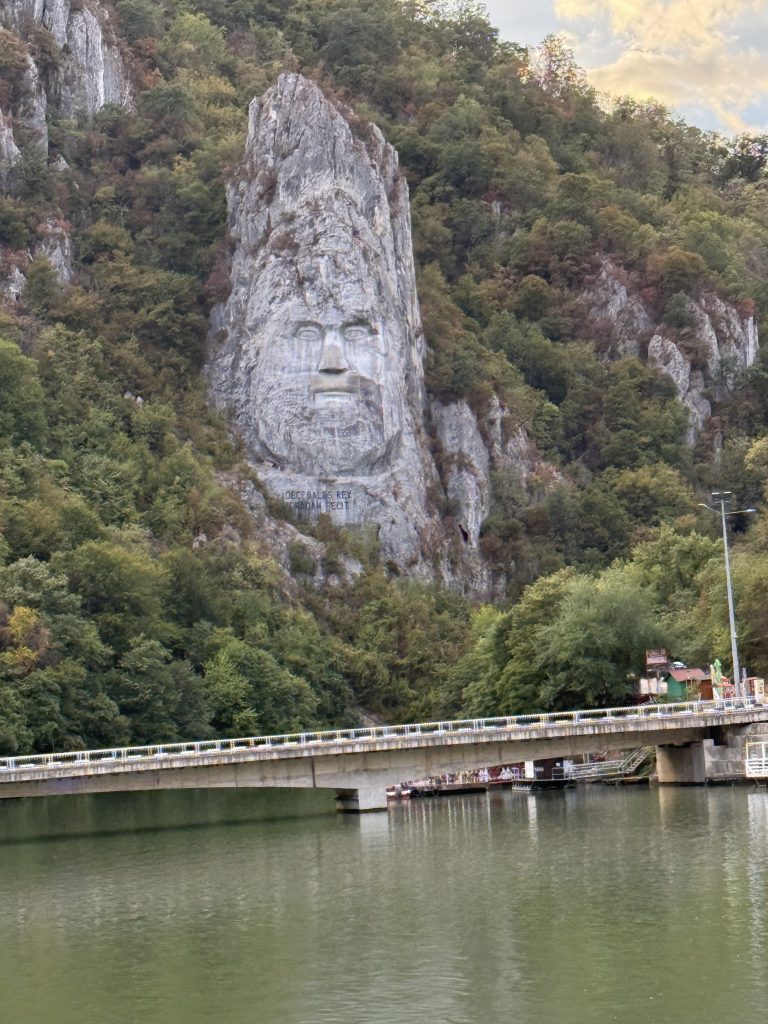
OK … The best way to describe the Iron Gate is to show it first in pictures. We had entered a section of the Danube that was wider than any we had experienced.
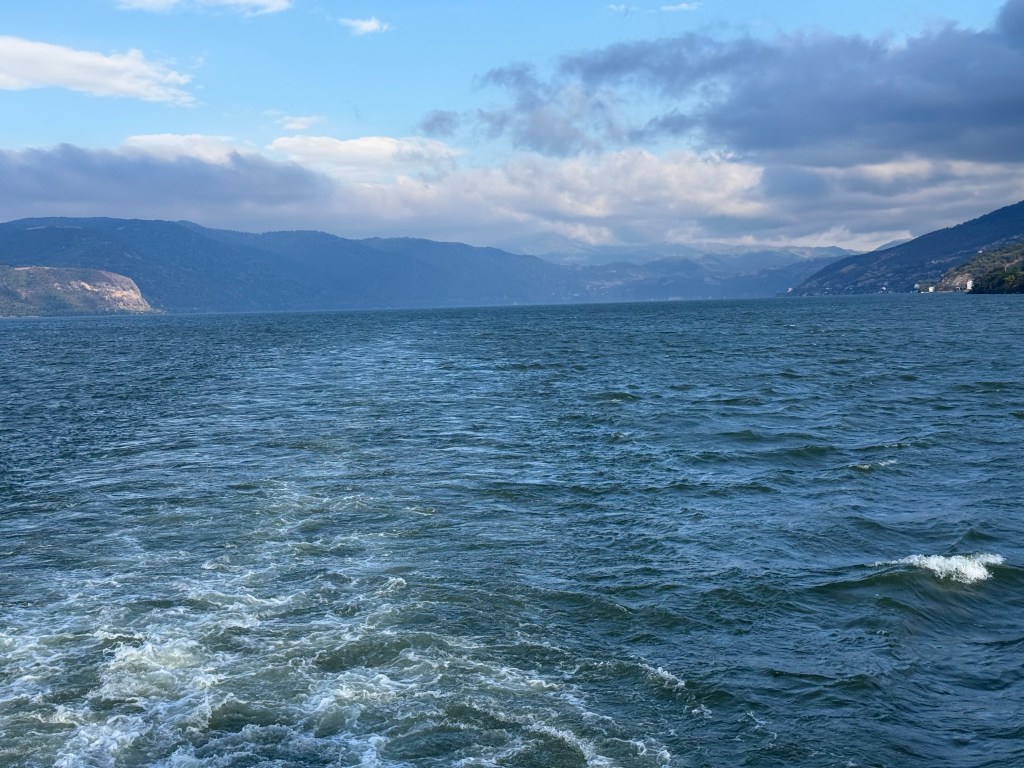
Then, all of a sudden, the waterway showed signs of impending narrowing.
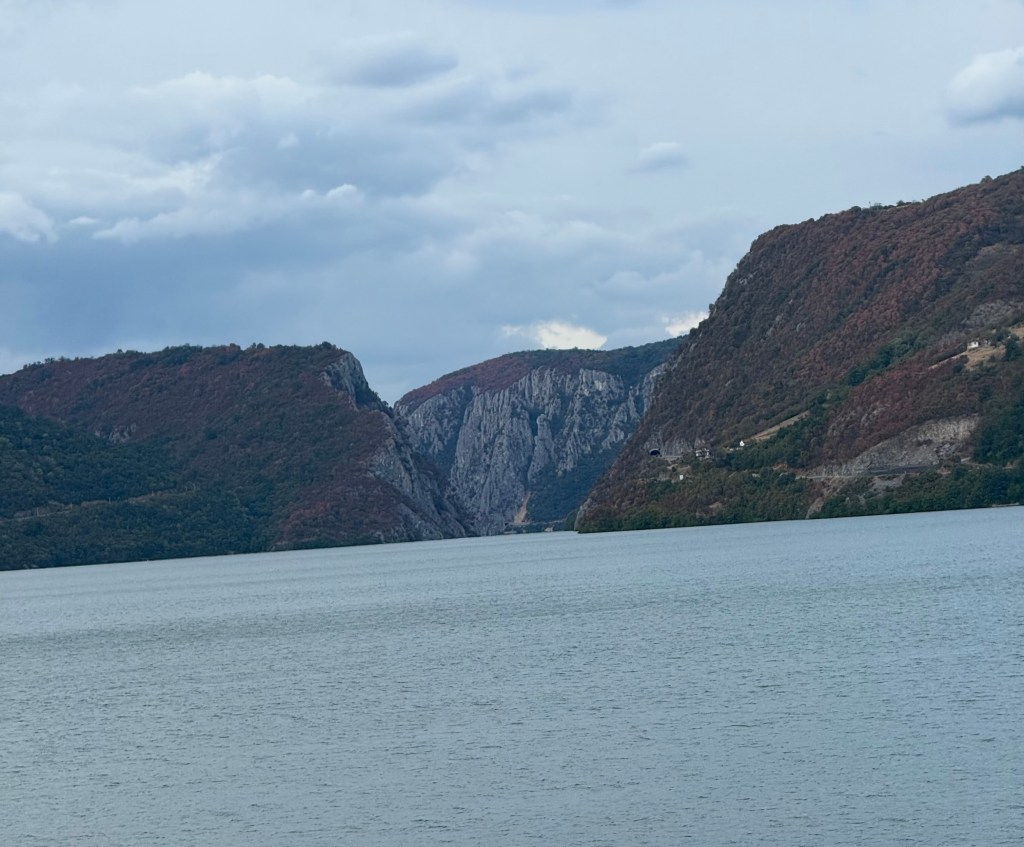
The sides of the gorge began to rise and the fiver became narrow. Serbia was on our south bank (right) and Romania was on our north bank (left).
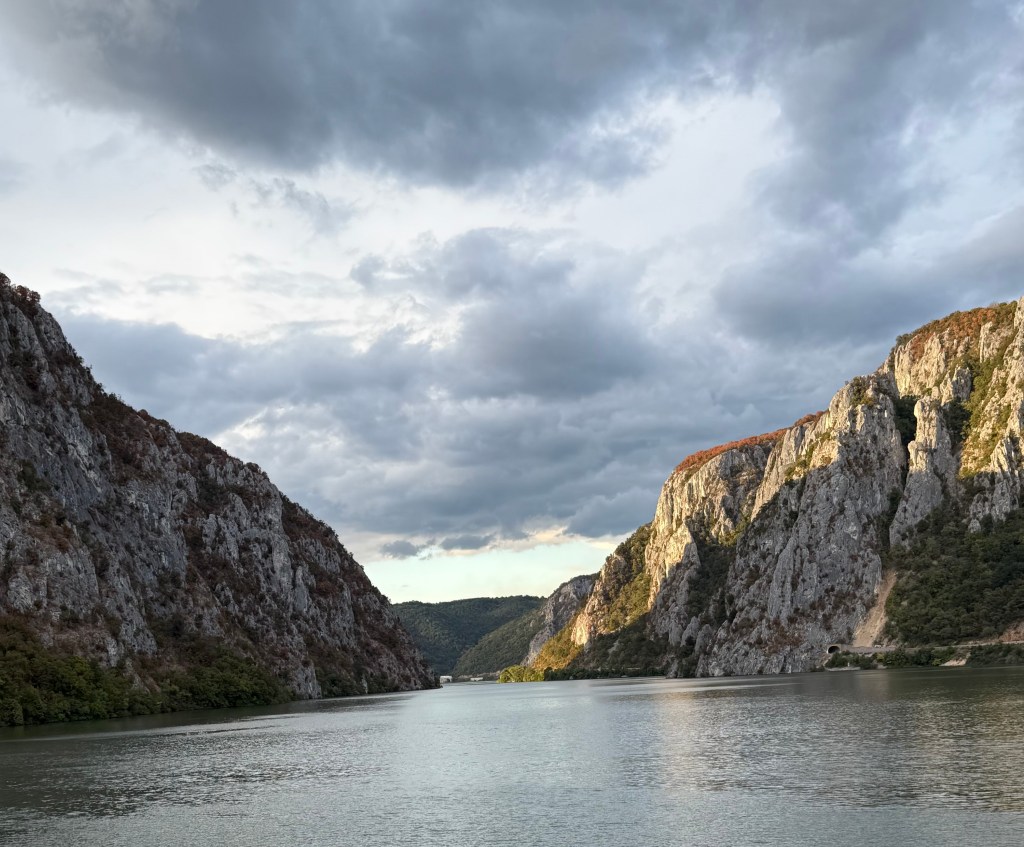
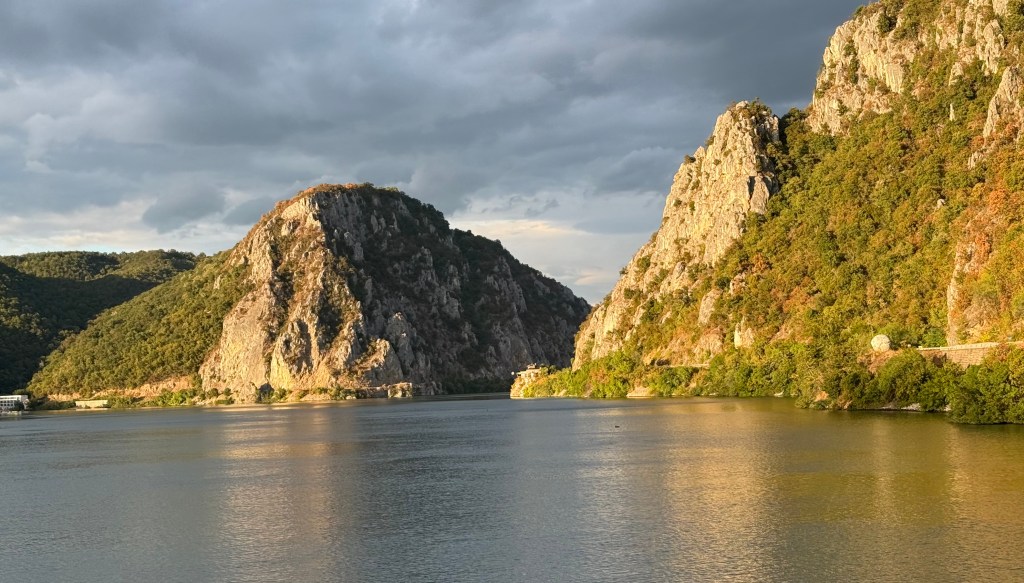
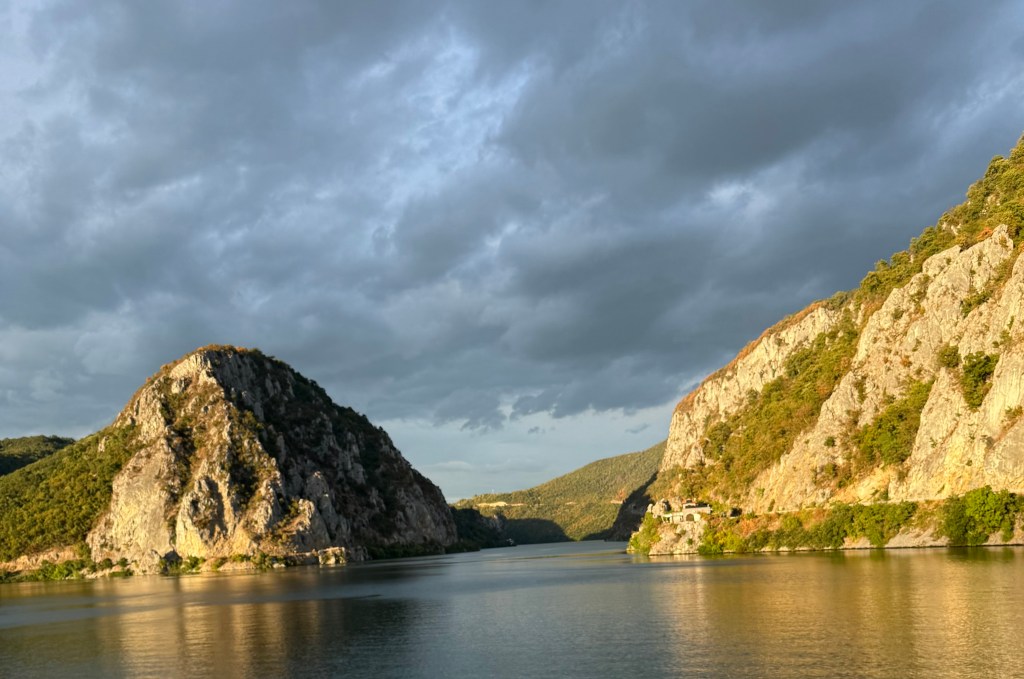
And suddenly we had entered the Iron Gate(s) of the Danube. It divides the Carpathian and Balkan mountains, forming part of the boundary between Serbia and Romania. The gate is approximately two miles long, and 530 feet wide, and the gorges are the highest on the entire Danube.
On the Serbian side of the river stands Trajan’s Tablet.
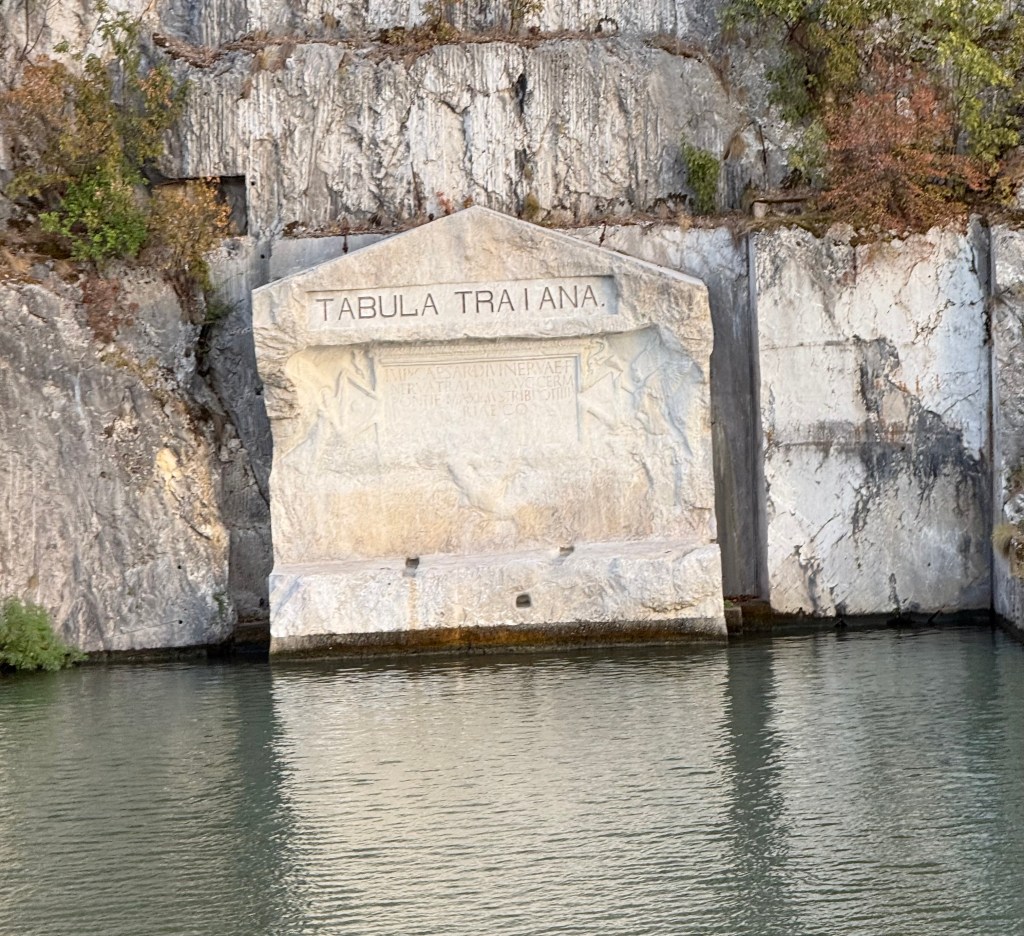
It was dedicated to the Roman Emperor Trajan who extended the boundaries of the Roman Empire to the east. He built a bridge over the Danube in an incredible feat of engineering that allowed the Romans to capture Romania. More on the bridge in the next blog entry. This inscription is considered one of the most important relics of Roman activity in the DanubeRiver region because of its nearly inaccessible point on the gorge.
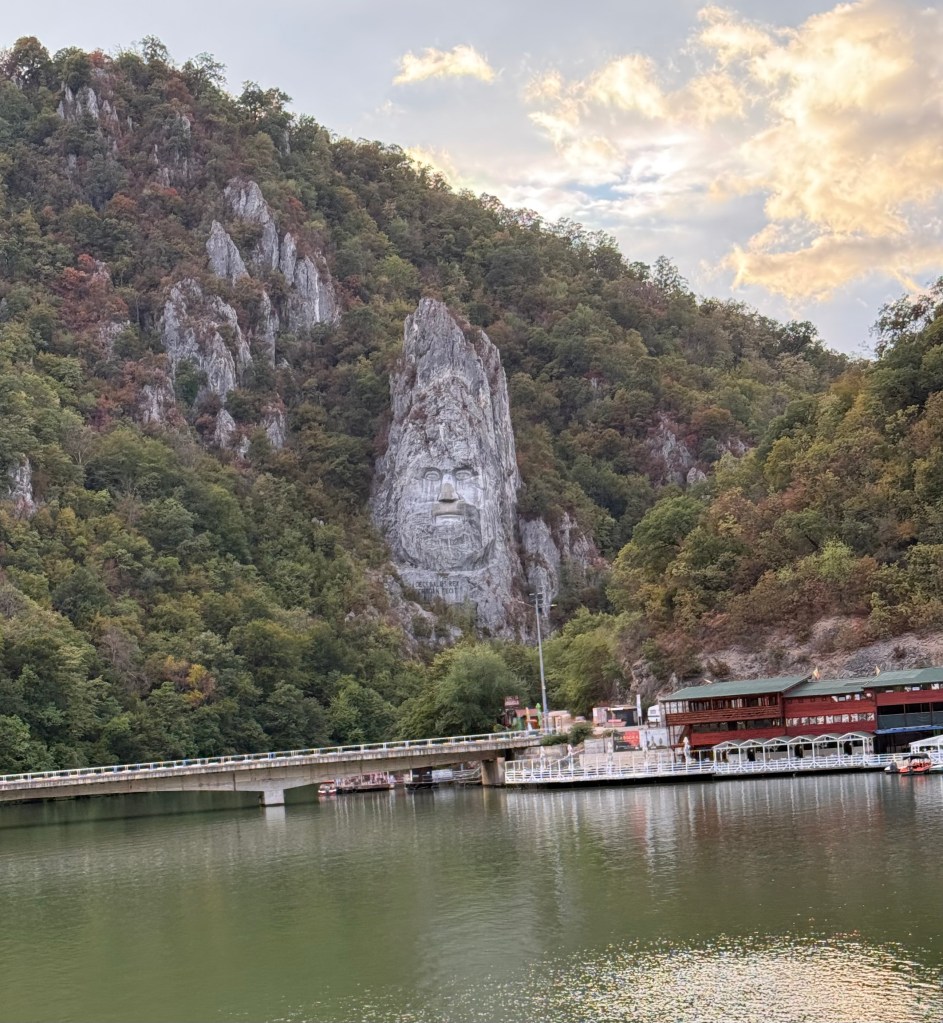
On the Romanian side of the river, there is an enormous rock sculpture of the Dacian king, Decebalus. He was Trajan’s opponent back in the day, and he is now presented almost opposite Trajan’s dedication in the Gate. It was commissioned by a wealthy Romanian businessman who wanted the Serbs to carve Trajan’s face on the opposing shoreline. The Serbs declined. It was completed in 2004 and took ten years to finish.
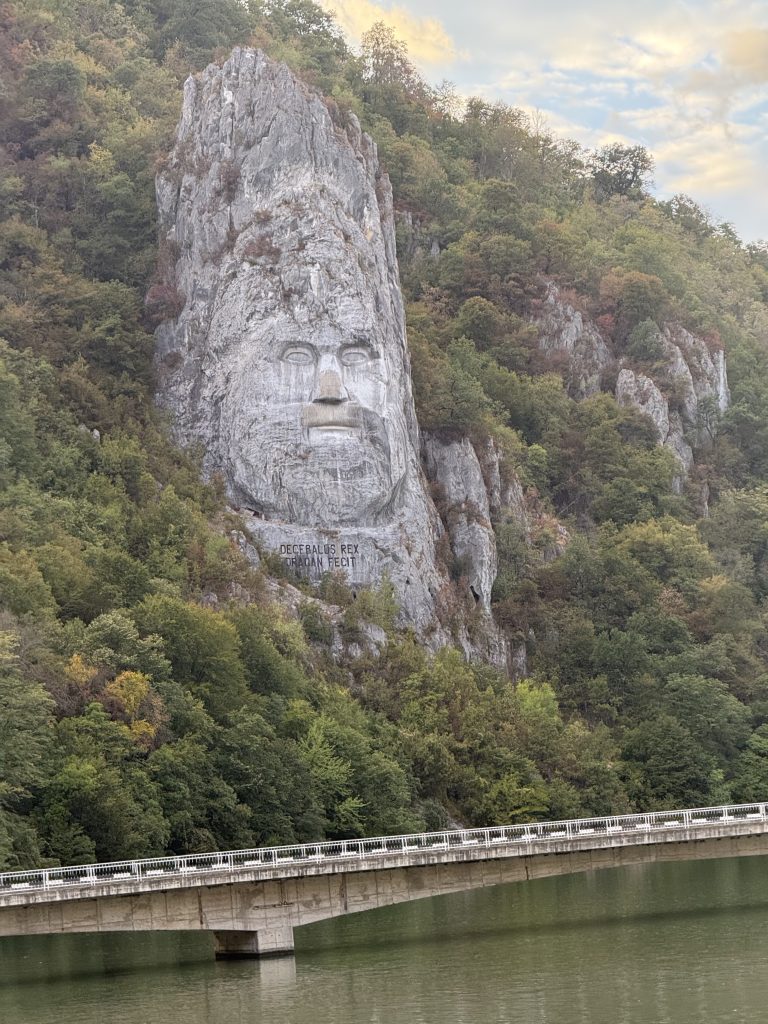
Cruising the Iron Gate was the highlight of the trip. Partly because it was nice to be on the water given the severe drought limitations. And partly because it is historically and geographically a very unique experience.

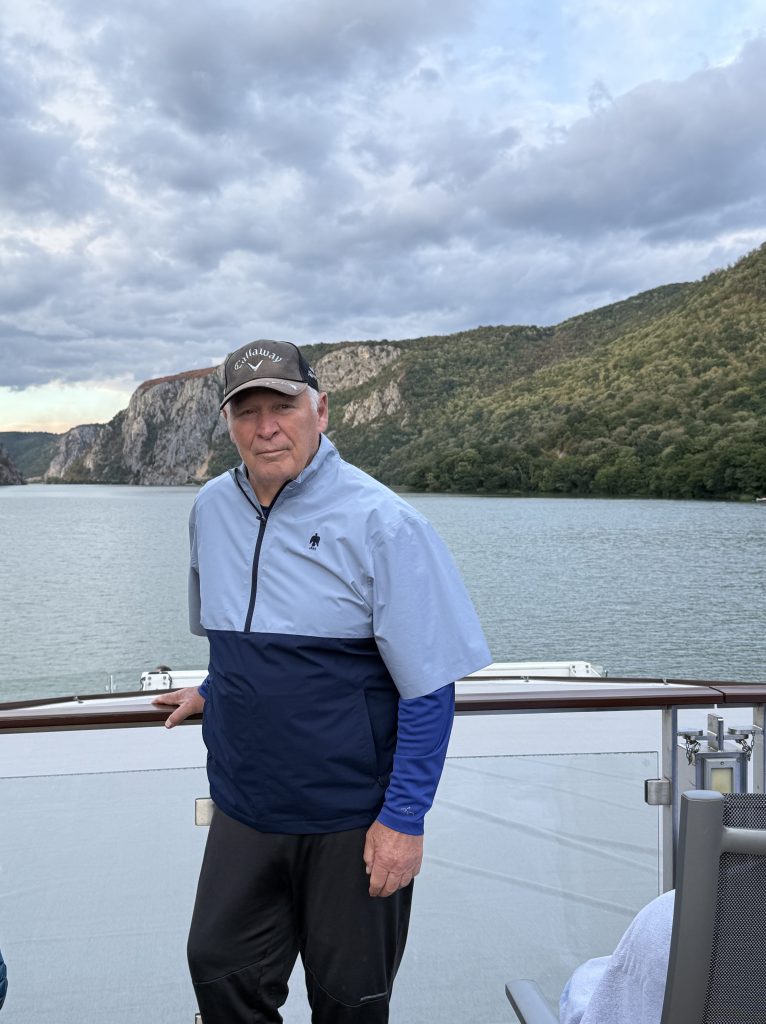
Finally a couple comments on why they called it the Iron Lock. Mrs Bear speculated it may have been because iron mesh was pulled across the narrow passageway to collect tolls. Our guide told us that the rock in the gorge contains iron which gives it a reddish hue. And “Lock” refers to the narrow passages and swift currents. Hundreds of years ago, specialized navigators guided ships through the passage, of course for a toll.


