
After cruising through a series of smaller German cities on the River Rhine, our river cruise took us to a group of capital cities on the Danube: Vienna, Austria … Bratislava, Slovakia … Budapest, Hungary … and Prague, Czech Republic.
After our scenic cruise of Austria’s Wachau Valley, we arrived in VIENNA the next morning. The contrast couldn’t have been more striking. Vienna is a city of 1.5 million people and one of the most visited in Europe. We did a combination bus and walking tour that focused on Vienna’s musical and political past.
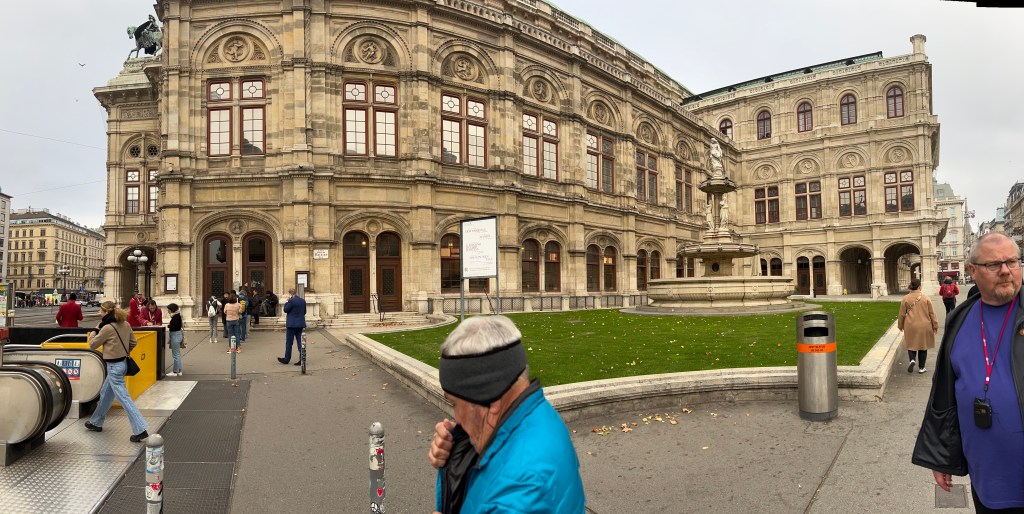
The photo above is Vienna’s Opera House which features the music of Mozart and Liszt. Some of our fellow travelers came back for an evening performance.

Our primary Vienna activity was walking through Old Town, much of which was taken up by the Hofburg Palace. Most of the palaces we saw didn’t fit the Disney mold. This one just looked like a building without end that had rectangular components. In fact, the various rulers appeared to add on every century. They seemed to demonstrate their greatness by building wings with more rooms than previous rulers…

.The picture below is only one small part of the palace !!
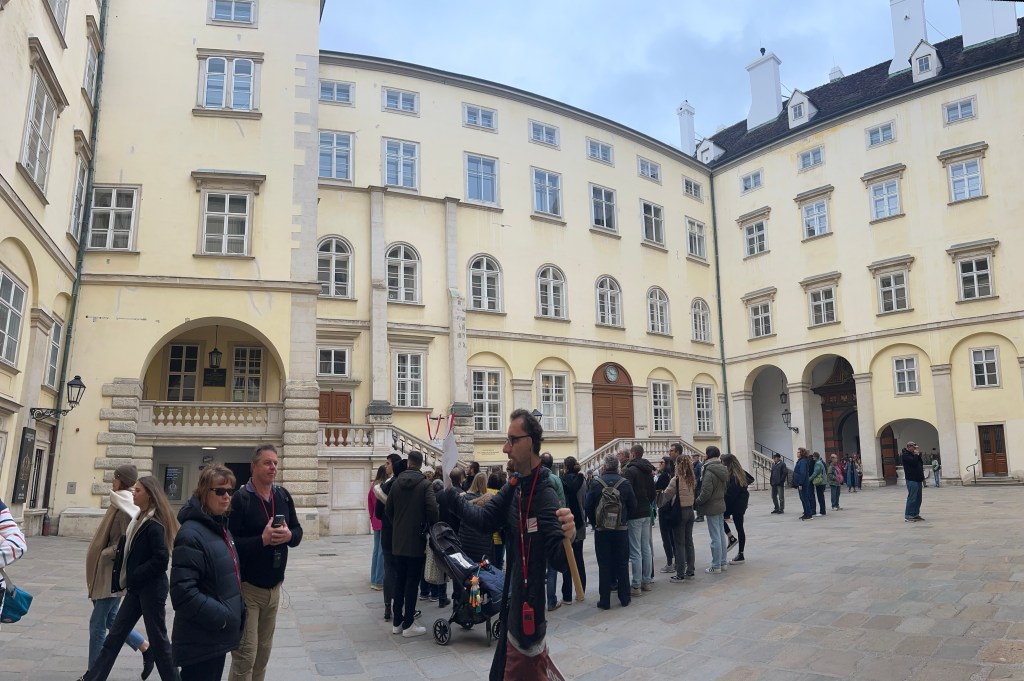
One of the limitations of river cruising is the lack of time and ability to actually experience a sight or attraction. Their offering is usually a “walking tour,” which lets people walk through an area of a city and see what’s there. So we saw the palace but didn’t go inside. We typically had an hour or so of free time at the end, that might let you see a church, not a 100 room palace. Mrs Bear had some days when she went out in the PM for more in-depth touring, but I opted to stop after walking the 3-5 miles in the AM tour. So what we got was primarily a glimpse and Mrs Bear’s wish to return for more detailed visits.
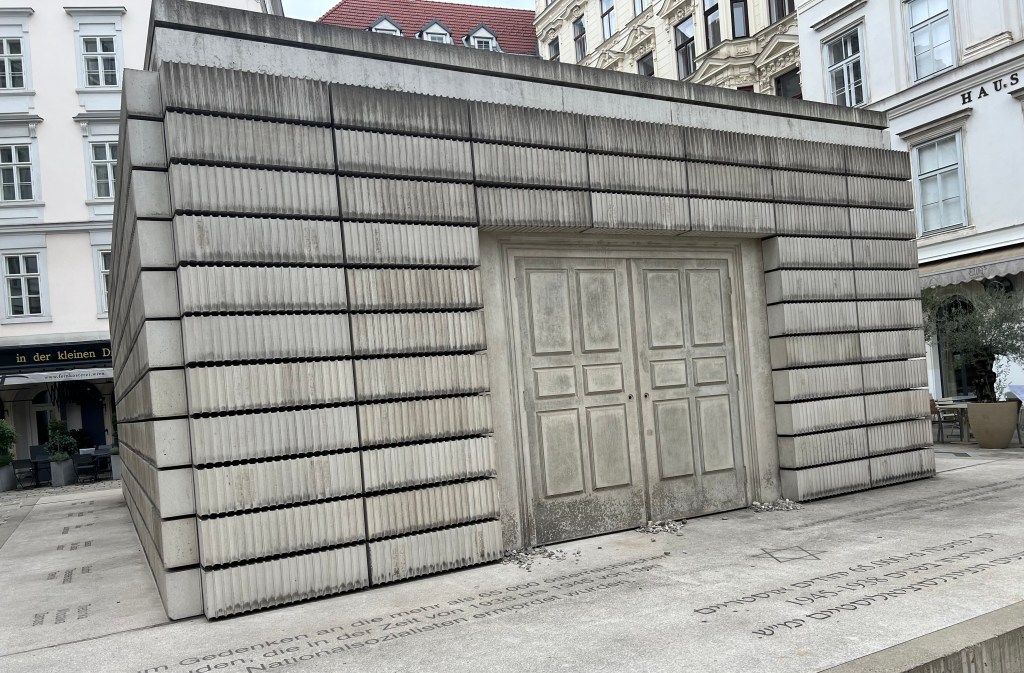
Another interesting reality : Almost all the cities we visited made some sort of grand gesture to the Jews slaughtered in the Holocaust …. They all seemed very apologetic… Some, like Nuremberg hosting the trials after the war, were larger than others. The above is Vienna’s remembrance of the Jews from their city who perished.
We could have spent more time in Vienna the next morning, but instead opted to go on an all-day visit to BRATISLAVA, the capital city of Slovakia. The photo at the top of this post is their Palace. It was actually taken that evening as our ship passed by on its way to Budapest. The pic below were from our actual visit.


The driving distance from Vienna to Bratislava was about 60 miles and took about 90 minutes … our ship made it in about the same time despite going through a couple locks. The Danube is obviously more direct.
Our guide had some interesting things to say about the Socialism of the Cold War era. First, everyone had a job which was absolutely required. If you didn’t have a job, the State assigned one to you. Her father worked in a restaurant and State Officials would come by to see if anyone was hiding out and not reporting to their job. She told us that a synagogue was destroyed because the State decided to build a road on that land… no discussion, or vote. Everything was done for the benefit of the State and citizens were expected to support it without question … and Heaven forbid you should want to travel outside the State!! A far different way of presenting it compared to how the term is thrown around in our political elections.
We walked through Bratislava’s Old Town below the castle. It was much smaller than Vienna.

The picture above is one of Bratislava’s manhole covers which was molded in the country’s shield.
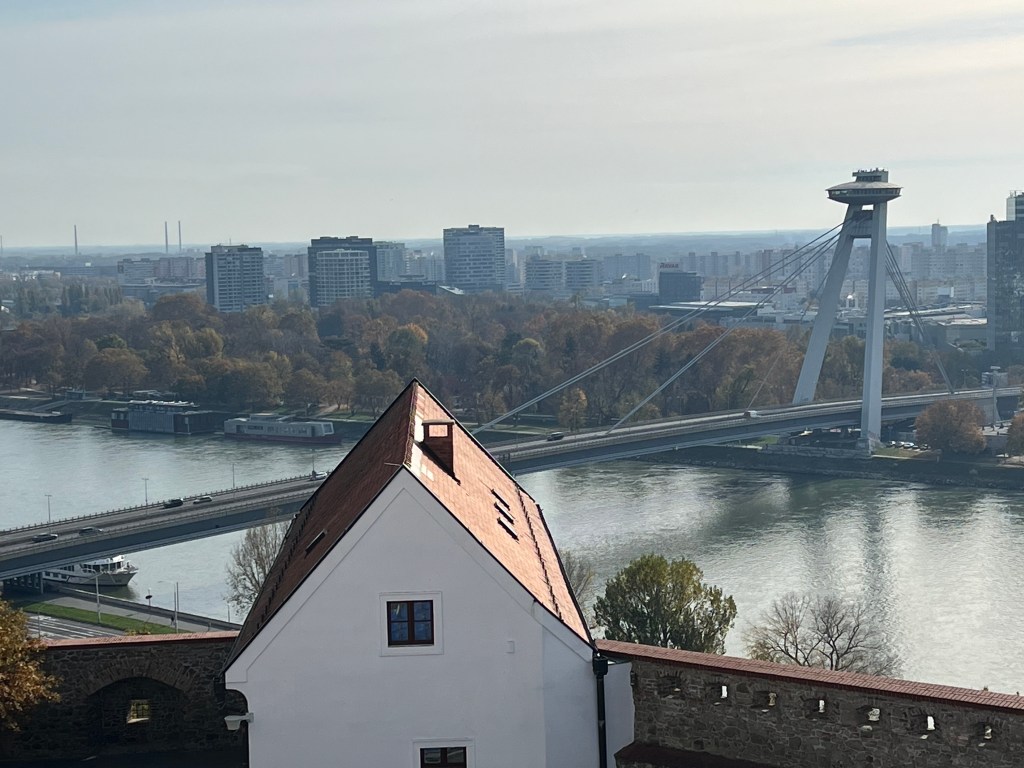
Here is the Danube bisecting the city into halves.
After a night of continued rolling down the Danube, we arrived the next morning in Budapest, the capital city of Hungary. This was the actual endpoint of our cruise. Budapest is an interesting city … Once again, it was split in two parts by the river, Buda and Pest. Buda is relatively flat, has the primary government buildings, and many cafes and shops. Pest is very hilly and home to the royal palace and church.

We cruised by the Seat of Government on the way into the city:

We later took a bus ride up to the palace in Pest. We got to see the Church which sits on the hill above the river.
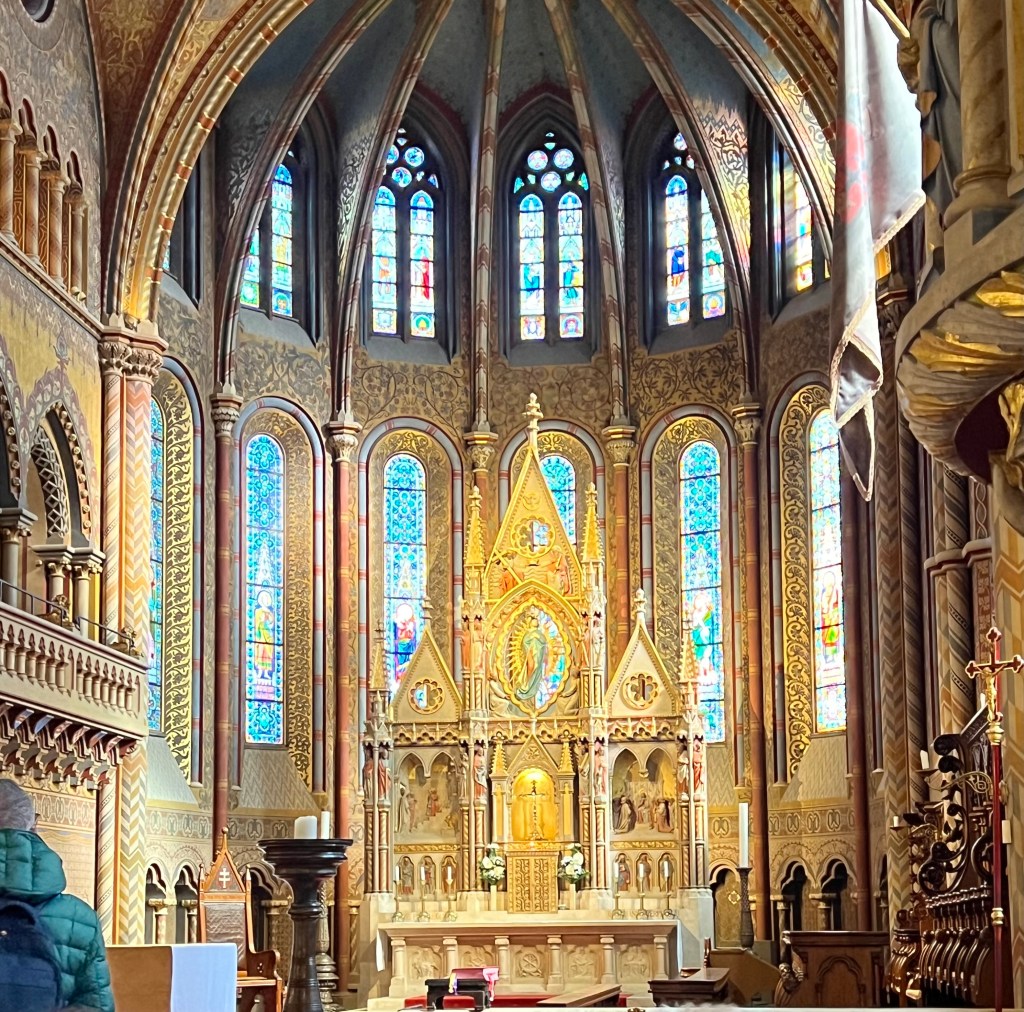

Rather than get back on the bus, I decided to walk back to the ship. I have earned the nickname “Wrongway,” because I often confuse directions by as much as 180 degrees. But if given a physical landmark to orient, like an ocean or river, I’m near flawless. So I found a a way to get down to the river, walked over the bridge, and located my ship.

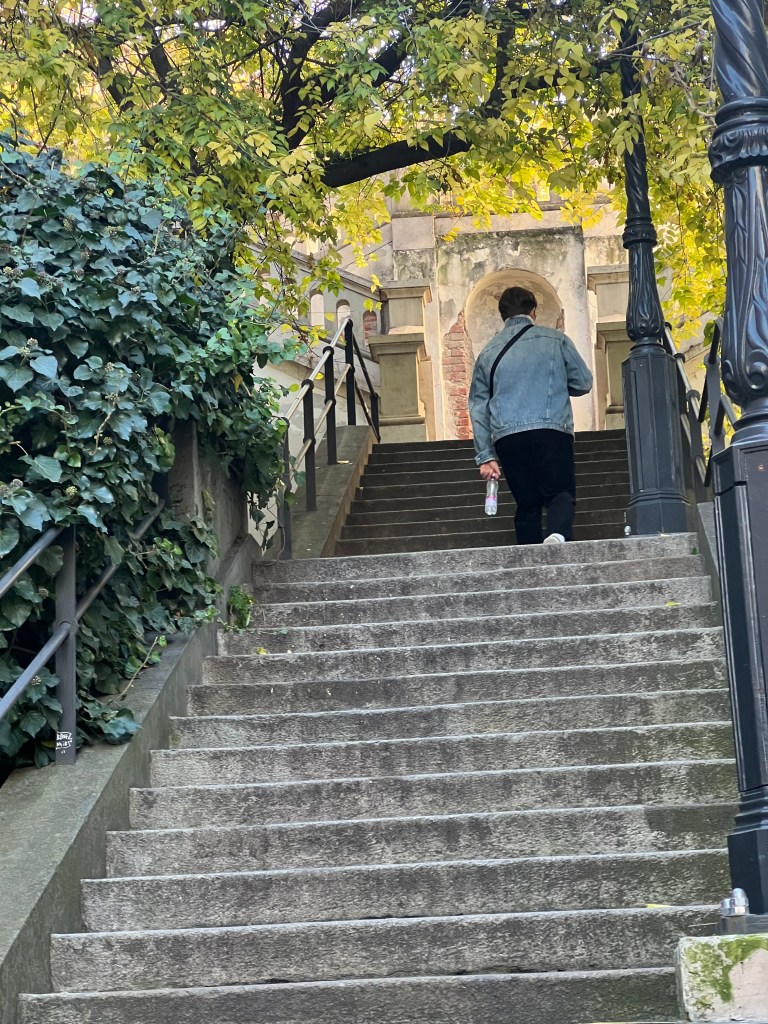
The steps down reminded me of walking from San Francisco’s Coit Tower down to Fisherman’s Wharf.

Lions guarded the bridge crossing the Danube…and it occurred to me that I had not included a photo of our ship.
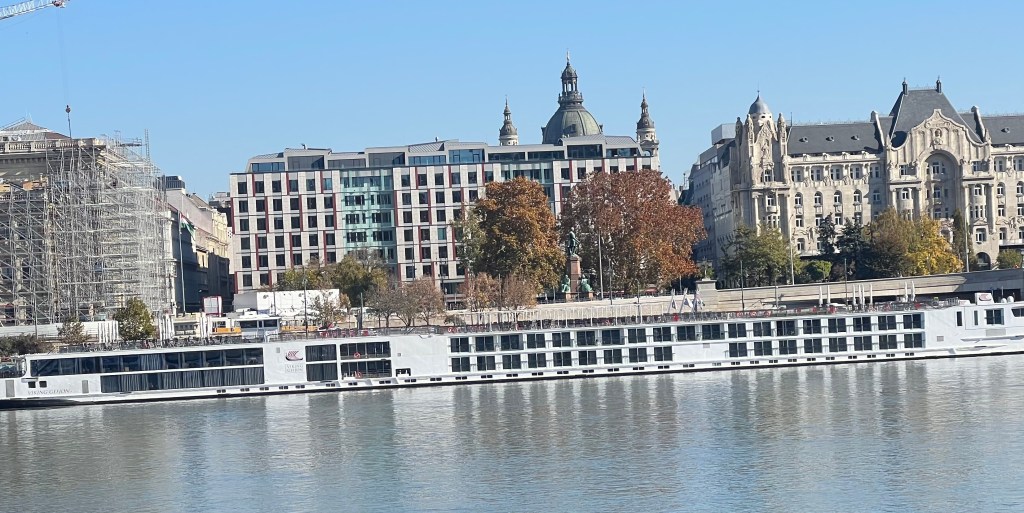
OK, I agree it looks really weird !! They call them “ Longships.” The areas on the left with full windows are dining rooms and meeting areas. The smaller windows on the mid to right is are the bedrooms. There are three floors of bedrooms, and the roof is an area where you can veg out or walk laps, etc. Another interesting thing is that the river barges have a similar shape. This is primarily due to the extremely low height to get under some of the bridges along the river. There were sections where the roof level was shut down and the ship lowered the bridge ( area where the crew seers the ship) to get under the bridges.
After making it back for lunch, I went back out to the Buda side and walked up to another church.
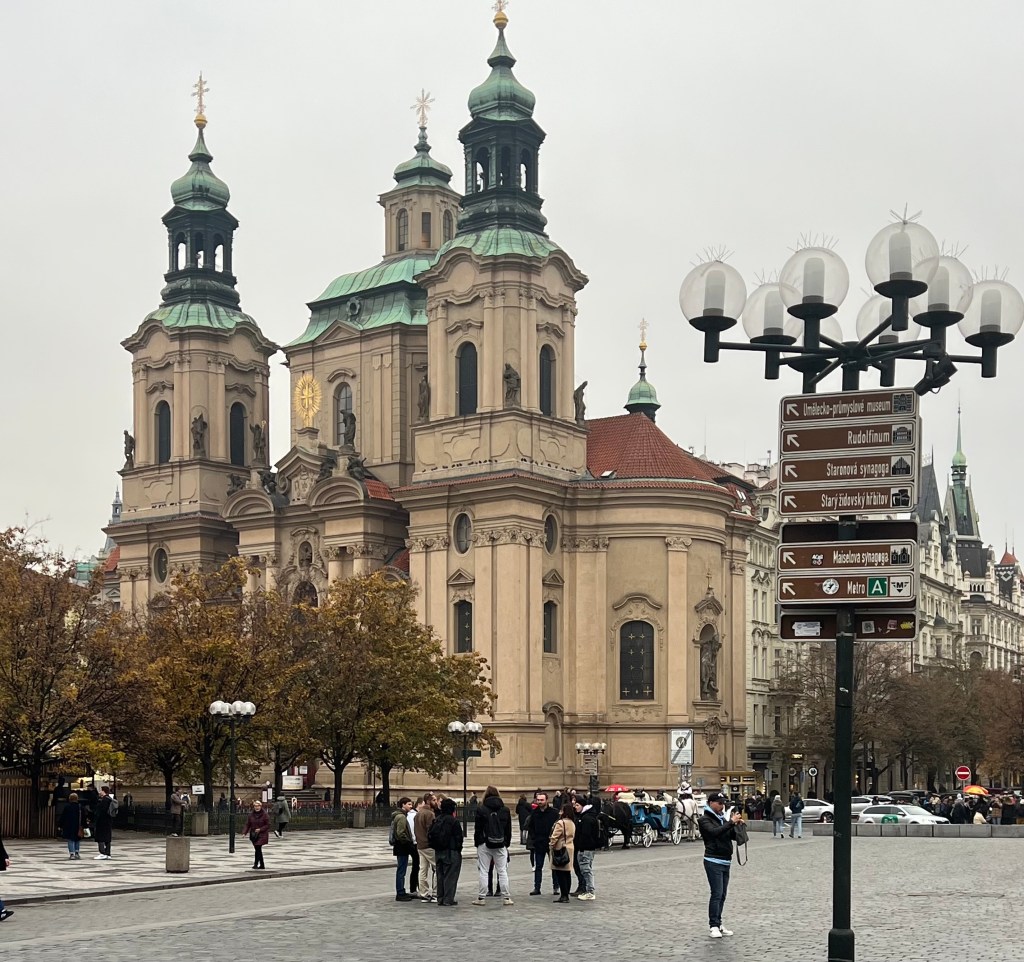
But the church was closed to visitors … back to the ship for one final meal and to get ready to drive to Prague tomorrow.

Our final Capital was PRAGUE , the Czech Republic. It was a six hour drive to get there. Prague is north of Venice and Bratislava, so we had to drive back across Slovakia’s to get there. This was an optional visit that we added to the end of our cruise, although there were lots of Viking cruisers there, going in a variety of directions.
The Czech Republic and Slovakia used to make up Czechoslovakia. We asked our guides in both countries why they split. The decision was made politically without ever asking the people. And it didn’t occur because of some big cultural or religious divide.
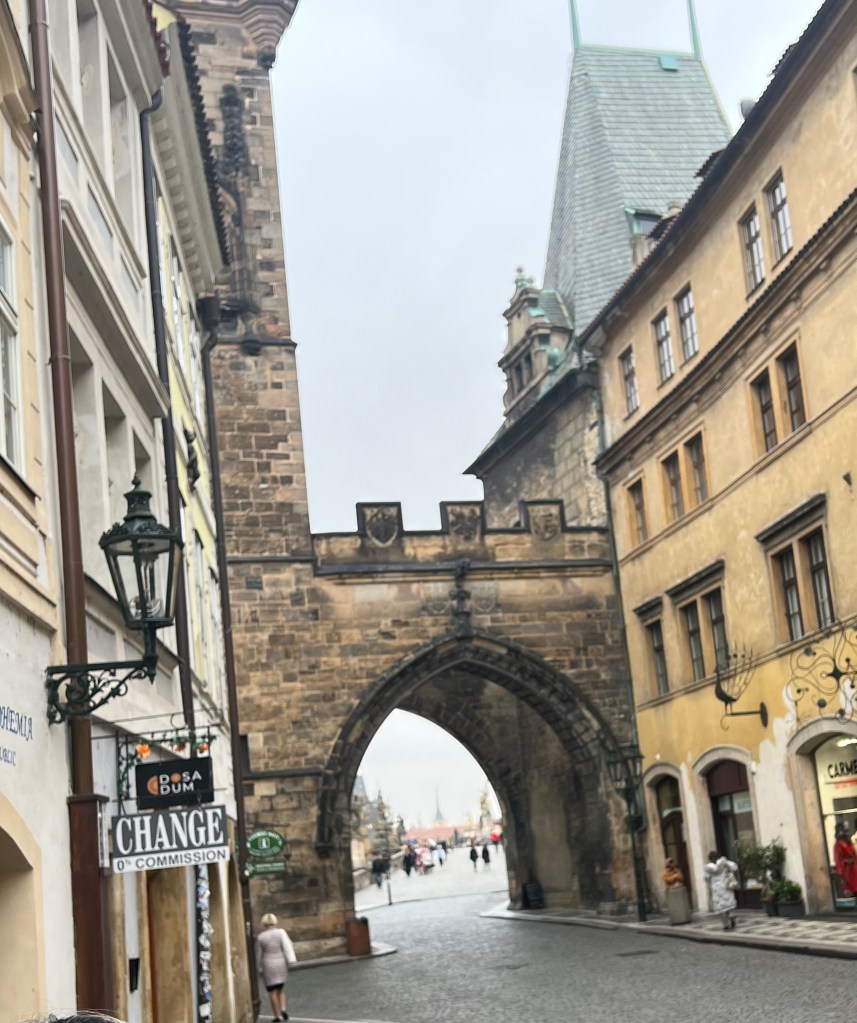
Just like most cities in this part of Europe, local rivers divide the cities into sectors. The above picture is the gate leading unto “ the wooden bridge.” The bridge burned down centuries ago and is no longer wooden. Prague has restrictions about how tall buildings can be, and most of the buildings were built originally in the 15th and 16th centuries. I’m not very knowledgeable about architectural styles, but for those who are, Prague is for you.

Here is a photo of Prague’s canal that allows for navigation through town … If you look carefully, you’ll see a mill wheel which was the other primary use of the canals.
We walked through Prague’s Old Town … The most interesting thing was a clock that measured time, seasons, and sun and moon locations.
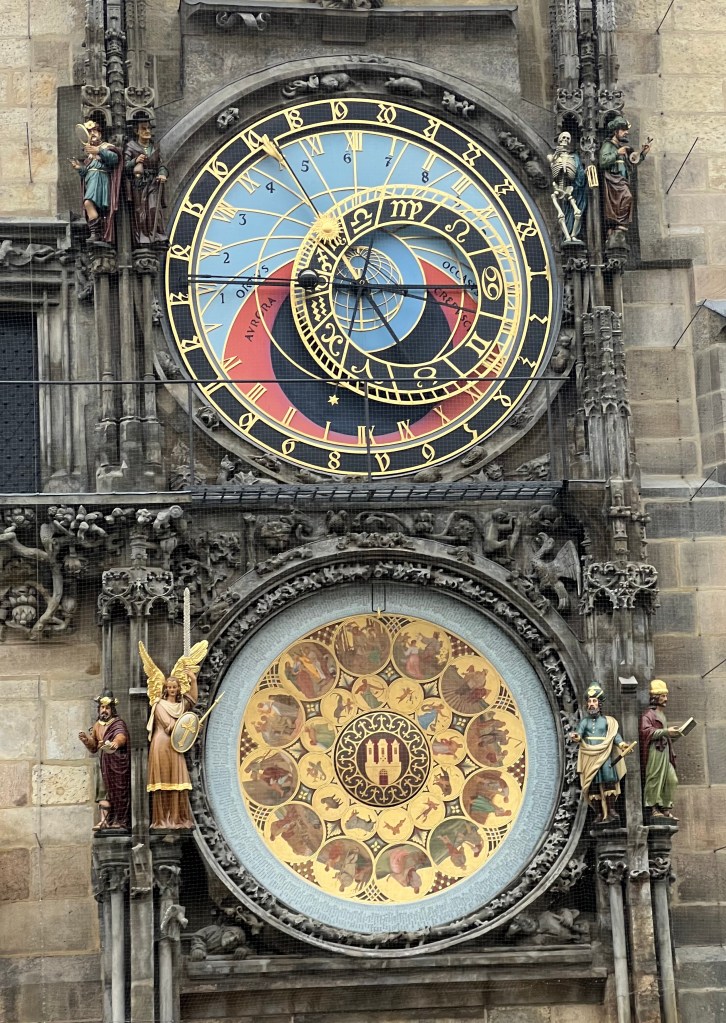
The hands on the clock are reversed… the long hand is hours and the short hand is minutes. Like everything else in the city, this clock is old ( and beautiful.)
We ended our tour with a walk through the outside of the palace and the cathedral. Prague is known as the City of Spires…. So there were actually a multitude of beautiful churches. Our guide said that only about 10% of Prague’s citizens attend church regularly, so the churches offset their expenses by holding classical music concerts..


The top photo is the church at the palace … the others helped Prague deserve its nickname. A wonderful region that Mrs Bear would love to visit again.

 The Adventures of Barry Brink
Your cruise looked most enjoyable – a good way to have a quick view of places, so you can easily choose which ones to come back to, to explore in depth.