
After Hiroshima, we visited a series of Japanese cities we had never heard of (with the exception of Nagasaki) as well Busan, South Korea. Id like to write about some of our experiences from these ports.
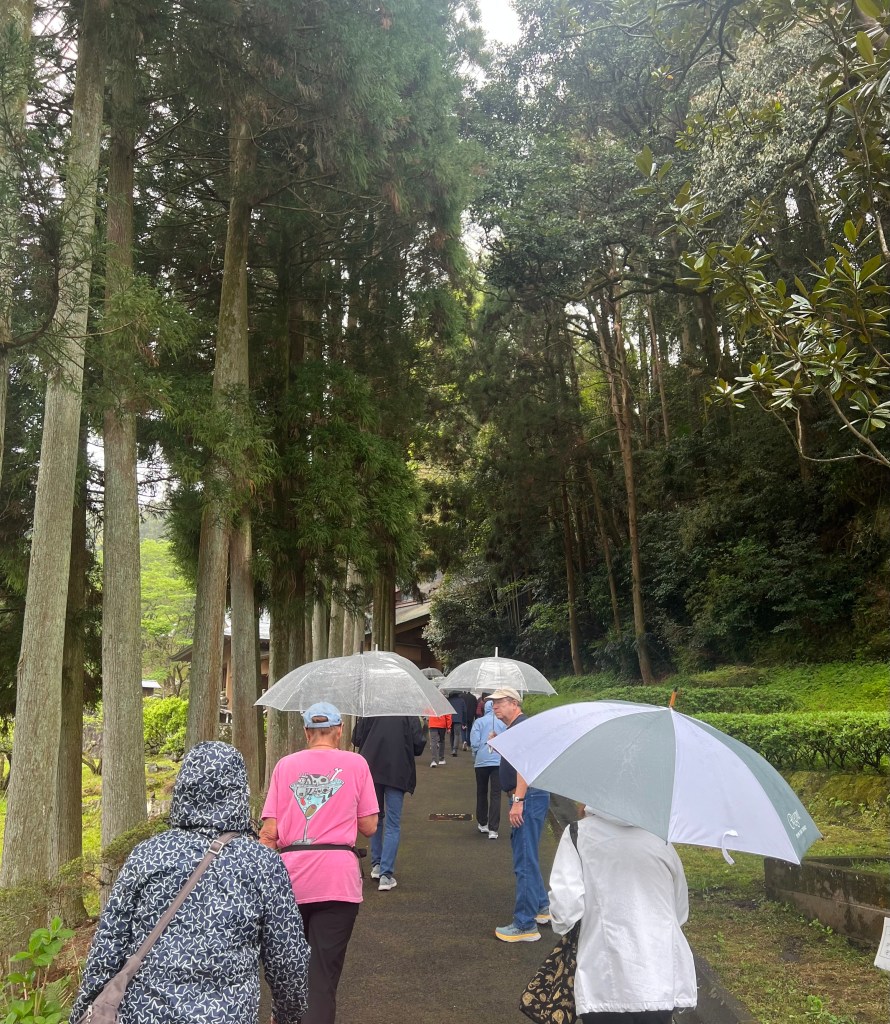

In Beppu, a city on the eastern coast of Kyushu, we drove into the countryside to the mountains behind the city. There we got to see a collection of Stone Buddhas placed on a walking path on the mountainside. They were carved between 850 and 1300, and rediscovered in the 1990s and are considered a cultural heritage.


The next night, we cruised through the Sea of Japan to Busan, our one stop in South Korea. Busan is .a city of four million, South Korea’s .second largest, with a total population of near 12 million when the suburbs are included. During the Korean War, Seoul had fallen and Busan was the sole remaining area to consolidate troops and supplies as the American Army and allies arrived.

Busan was a very vertical city without much green space. And perhaps the most interesting part of the visit was our guide’s descriptions. The city is facing a declining population. Young people leave the city due to a shortage of anything but entry-level jobs. The average salary is about $27,000 per year, and the price of a small condominium is $450,000. While this is much lower than Seoul’s average price of $1,000,000+, “ no apartment, no marriage.”
Younger people are not interested in merging with North Korea. While elder citizens may still have family in the North, younger citizens have grown up with the North being a separate country and they are tired of feeling bullied and threatened by the North. They feel their government has acquiesced to the North’s threats in the past, and they are tired of it.
Another part of our guide’s negativism was expectations at work …. nothing but entry level jobs that don’t pay well and require mandatory overtime. His review suggested that most get only three days of leave so it’s hard to go anywhere further away than Japan for holiday. And the Koreans don’t like the Japanese due to their lack of apology for war atrocities during WWII.
The only time our guide brightened up was while discussing Korea’s healthcare and pension systems… it sounded as if South Korea looks after its citizens needs.
We watched a beautiful show of native dances … all the dancers were female and the dances rhythm seemed to be in slow motion. The costumes were exceptional.

Then it was back over the Sea of Japan to Nagasaki…. Like Hiroshima, it has an extensive Peace Park and Memorial. But we chose to drive out into the surrounding mountains for a glimpse at “Japanese Hell.”


The Japanese have many forms of purifications. Many seem to involve purifying yourself before you pray at a Buddhist or Shinto alter. Conversely, they see the geothermal gases, bubbling sounds, and sulfer smells, and they believe they come up from the afterlife. So our guide took us on a tour of this activity and told us we were visiting Hell.
There was another reason these springs are held in a negative light. The Portuguese were the first colonialists to discover Japan, and they introduced Christianity. At first, the government supported this movement, but eventually became threatened by the number of converts. The government then banned Christianity … Japanese Christians were brought to these springs and made to denounce their religious beliefs.

The cross, above Hell, marks the spot where these rituals took place.
Later that day we drove back through the 25 or so switchbacks that had led us to Hell and entered the town by the ocean. This was the site of the local Samurai’s castle. Small compared to the castles in Osaka and Kōchi, it was still impressive and required a strenuous walk to climb the stairs to the observation tower.
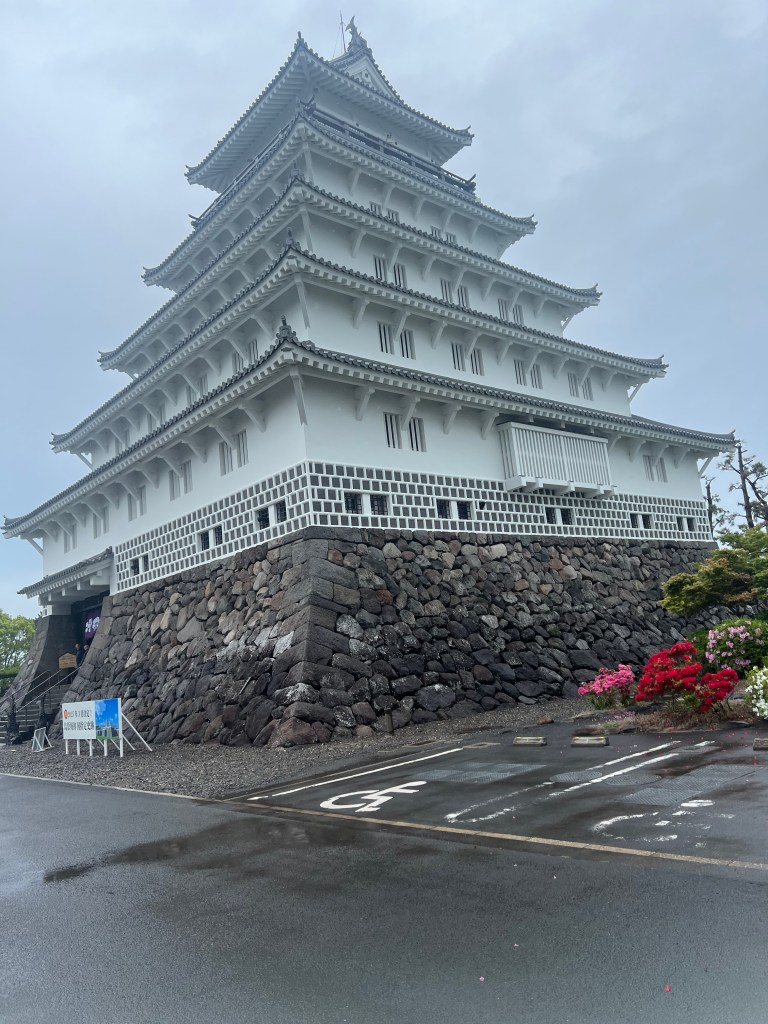
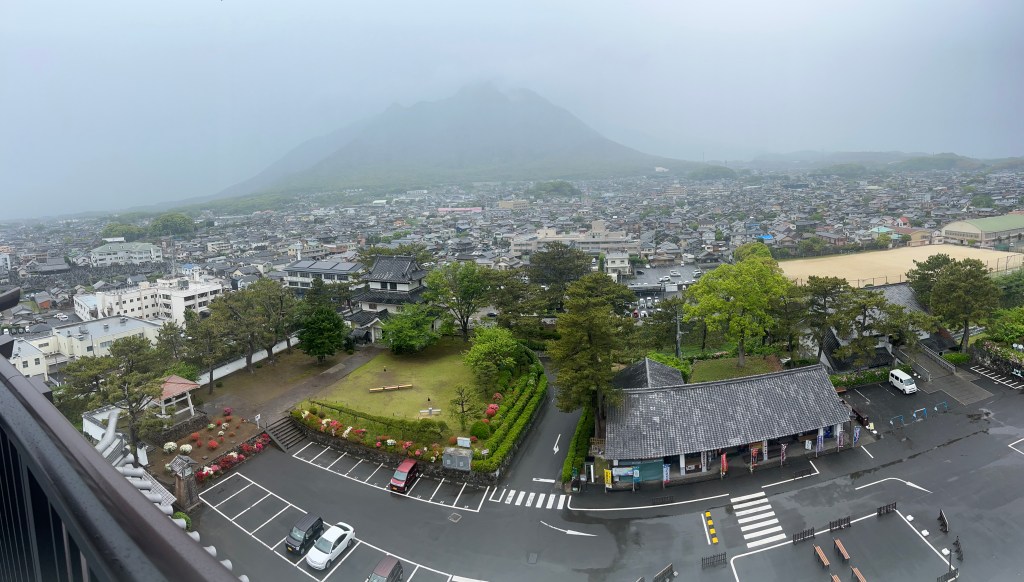
The photo directly above is a favorite. It was taken from the top of the castle, looking towards the mountain that we had ascended to visit Japanese Hell. I found it quite ironic that we ascended such a beautiful mountain to reach Hell!!

The next day, we docked in Kagoshima on the southern tip of Kyushu Island. Its primary attraction is an active volcano, 20 minutes by ferry from the city. Since it is usually in a state of eruption, it is often covered with smoke and difficult to see.

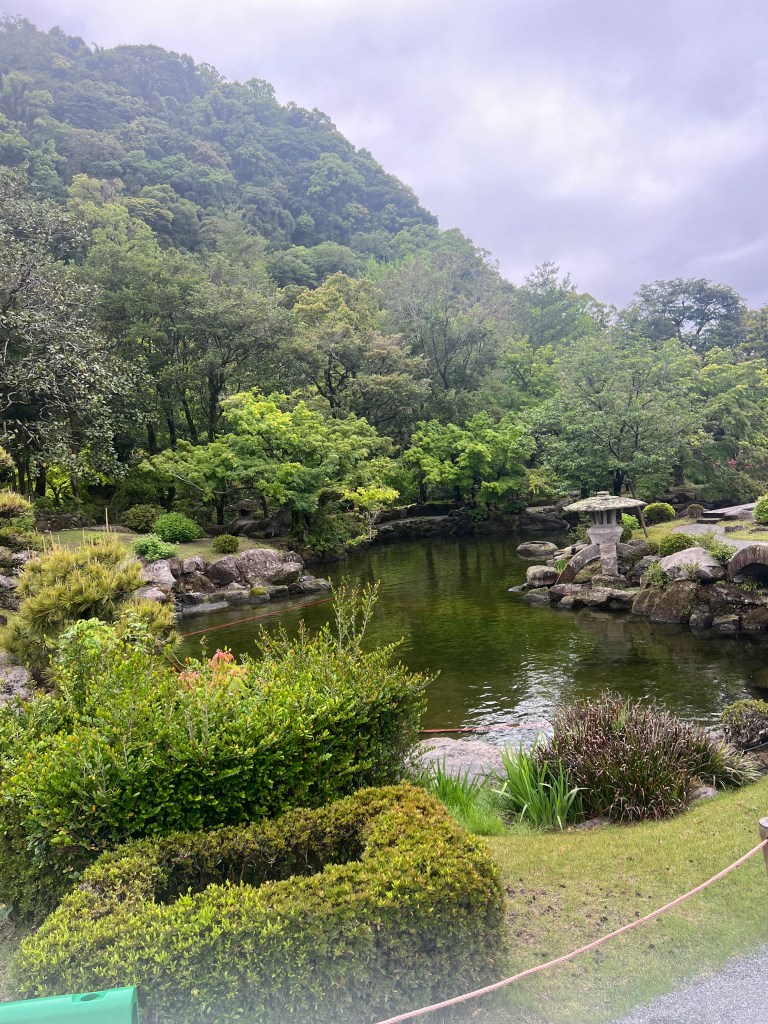
Mrs Bear was not interested in taking the shuttle to get a close look at the volcano, so we walked a lovely garden complex instead… the primary interest to me was their cat shrine. A local warlord took nine cats into a battle … with the smoke from the volcano and the battle, he could tell the time of day by looking into the cats’ eyes. Two of the nine cats survived, and judging from the fact that there is a cat shrine, they won the battle.



Later that afternoon, our ship turned north for a 36 hour cruise that took us back to Tokyo.

 The Adventures of Barry Brink