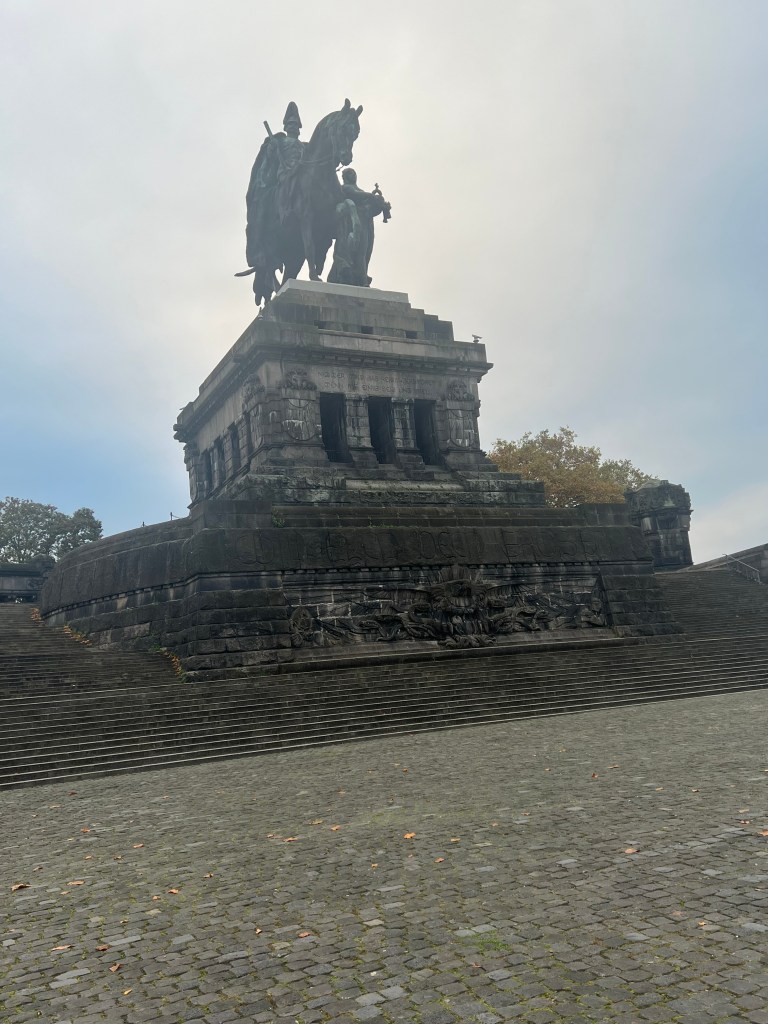
Koblenz is a smaller city situated in the spot where the Moselle River flows into the Middle Rhine. The merge is overshadowed by the statue above of William the First, the first emperor of a Unified Germany. Before William, Germany was a group of independent feudal states.

It is also the location of the House of Teutonic Knights. Their cross can be seen in the picture above.

Most of our group toured the castle complex on the other side of the Rhine River. I don’t remember much about it since we opted for a walk through the old town. However, I do recall our guide saying that the castle was spared during the war bombings and that most of the town’s people moved near the castle to be safer.
Once again, we were on the edges of the Roman Empire which bordered the shores of the Rhine and Moselle for trade routes and protection. The walk through Old Town actually traced the boundaries of the ancient Roman city.
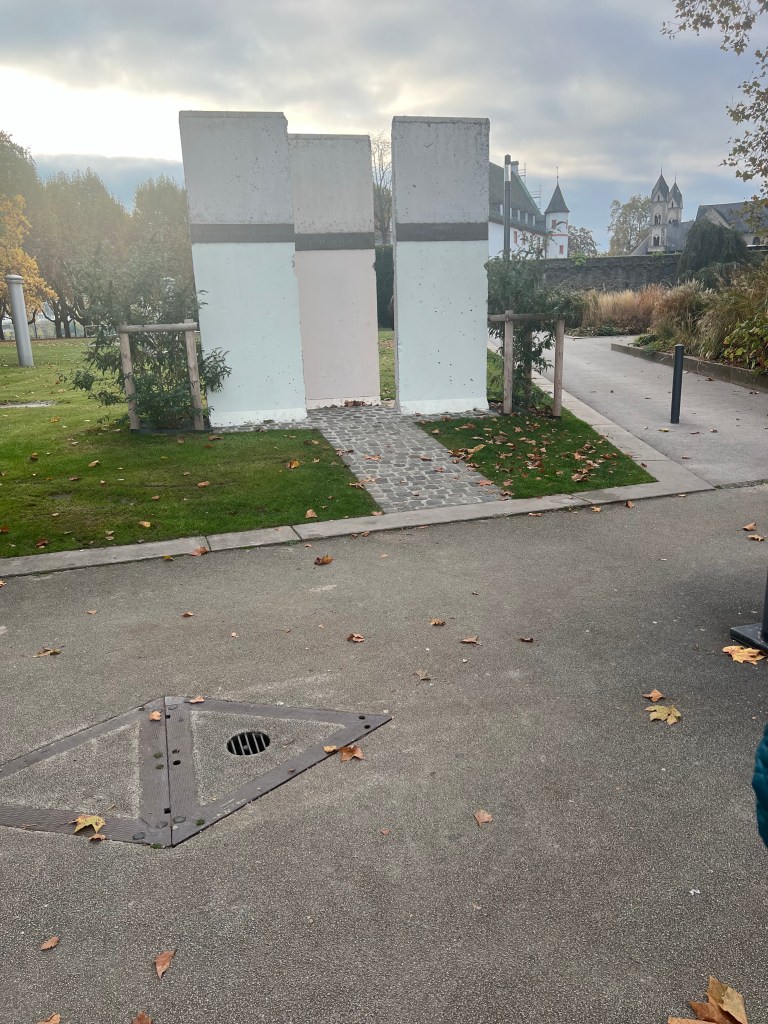
These are three panels from the Berlin Wall. Our guide rattled off the quotes from JFK and Ronald Reagan supporting an end to a divided Germany.
Much of the content of our German tours centers around the effect or noneffect the WW II bombing had on their cities and the subsequent need for rebuilding. I have not heard any political rhetoric about the war itself and no malice about the devastation of their country. In fact, we have heard more about the aid given by Americans after the war in the rebuilding efforts.
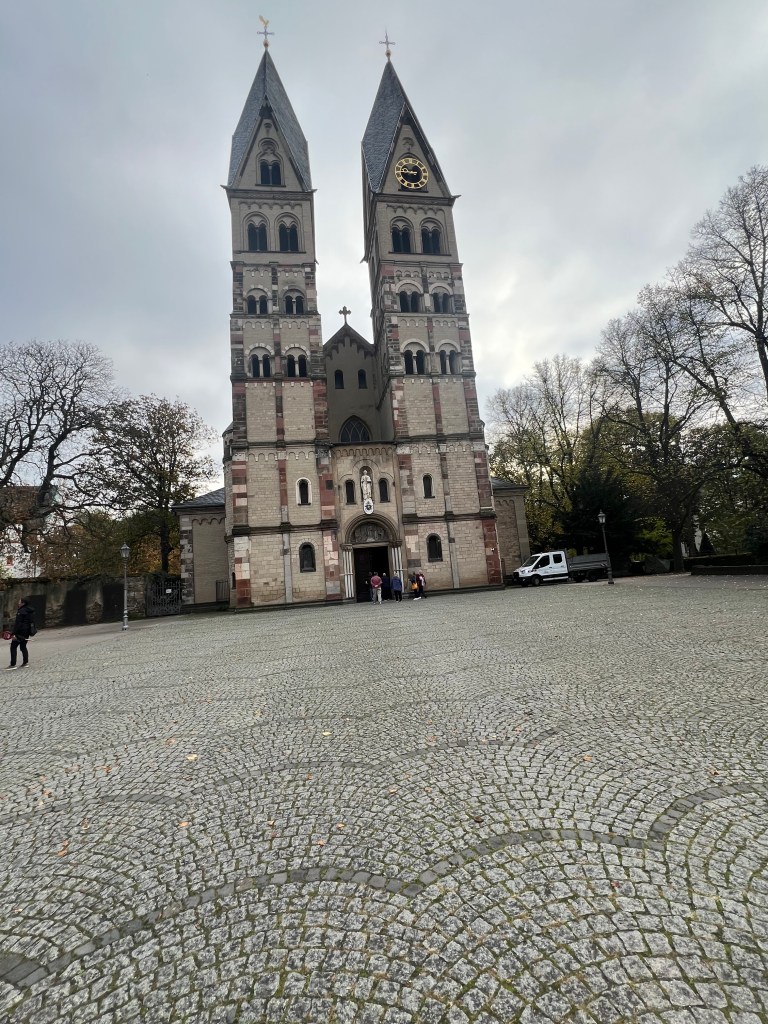
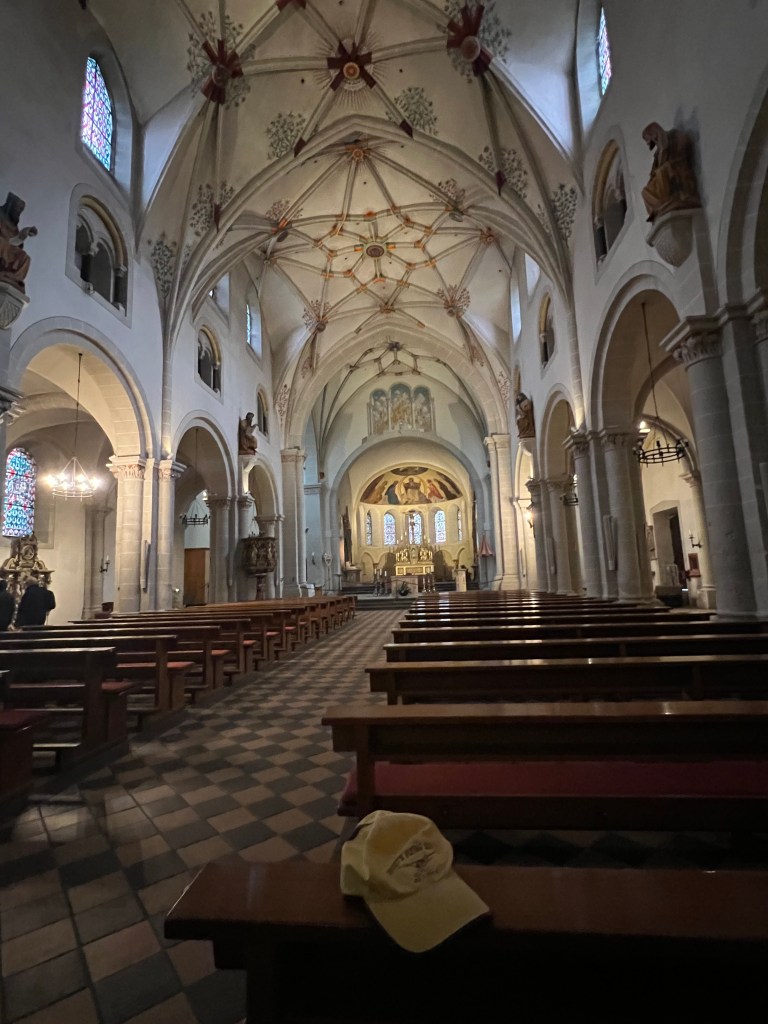
Every city has at least one major church, and this area of Germany has been predominantly Catholic.
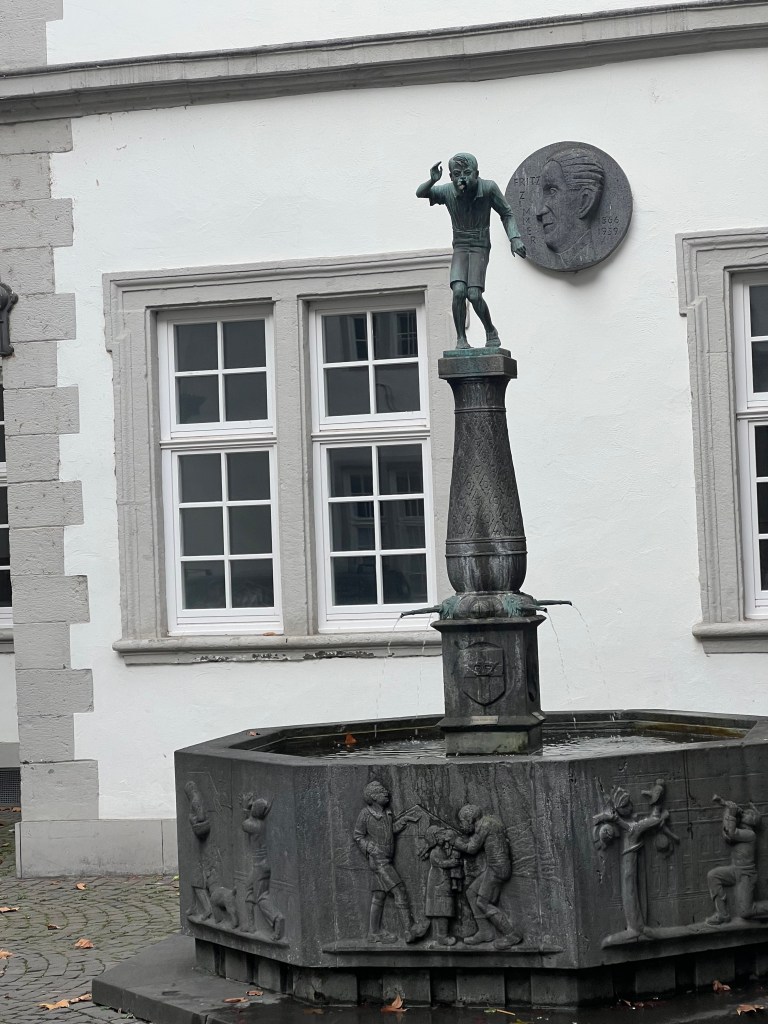

An interesting ending to Koblenz … I don’t recall the German name, so I’ll just call him the “ spitting boy .” Every two minutes he spits out a stream of water at unsuspecting tourists. You can see the wet cobblestones in the above picture. Mrs Bear was hesitant to take this pic, but I timed it well. The statue is like Old Faithful … a reservoir fills up, creating a level of pressure which stimulates the liquid release.

 The Adventures of Barry Brink